
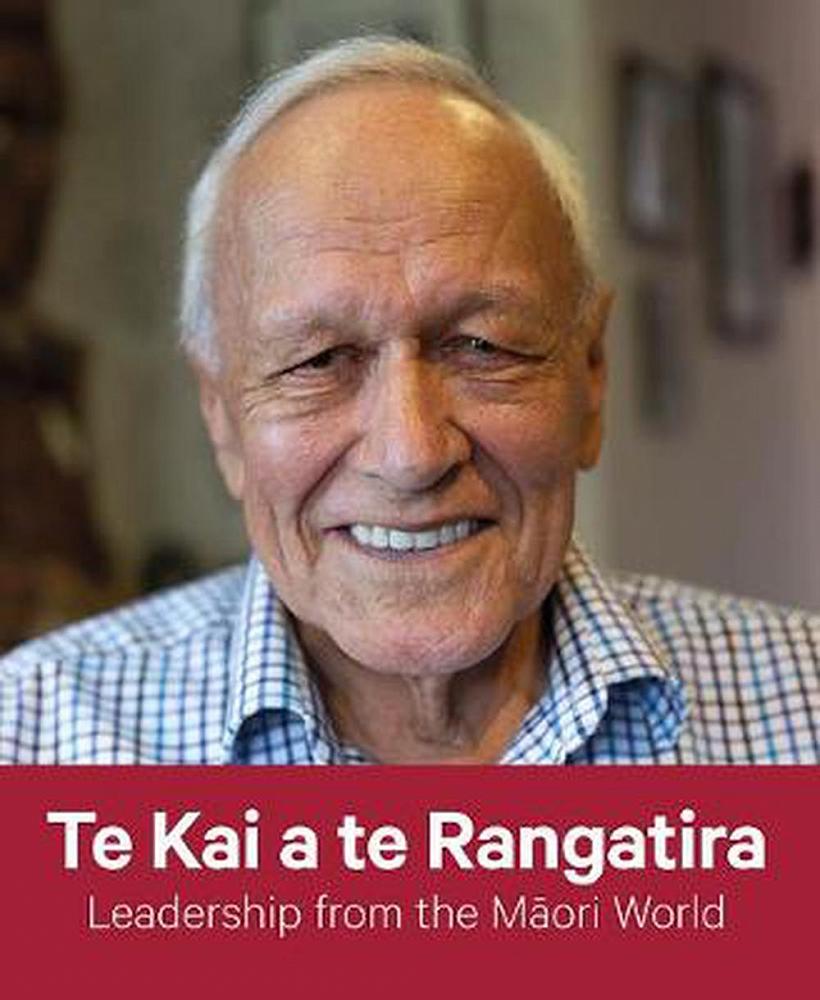
Te Kai a te Rangatira: Leadership from the Māori World
Edited by Rawiri Tapiata, Renee Smith, Marcus Akuhata-Brown. Published by Bridget Williams Books, 2020. Reviewed by Danny Karatea-Goddard
Ever since l had enough pocket money l started buying Māori books, kaupapa Māoriliterature. In the 1970s there was a limited number available that focused on iwi Māori. The oldest book l have is Ngā Mahi a Ngā Tūpuna (The Works of the Ancestors)written entirely in te reo Māori by "The Governor" (Sir George Grey) originally published in 1854. Another prized book in my collection is small volume by "S.A." — Mary Joseph Aubert. Published in 1885, Meri Hohepa’s compilation of Māori conversation and phrases titled, A New and Complete Manual of Māori Conversation, was later edited by academic, tribal leader and politician Sir Apirana Ngata of Ngāti Porou.
In my teens I became aware that almost every Māori home possessed a copy of Te Paipera Tapu (Māori Bible) which was first published in 1868. My own northern kin, in 1893, had translatedthe first Catechism of the Catholic Church into te reo Māori — Te Katekihama o te Hāhi Katorika. The first books and booklets in te reo Māori were printed offshore in places like France. Bishop Pompallier’s printing press in Russell became a game changer enabling books, periodicals and newspapers to be printed locally.
With the exception of Ngā Mōteatea, an authoritive collection of Māori prose and poetry from the tribal histories of Tūwharetoa and Tainui, most other printed literature and commentary regarding Māori was written by Pākehā.
In 1986 Maru and l, newly graduated, married and were given the entire set of the Pākehā ethnographer Elsdon Best's books on Māori life and beliefs. Every serious Māori academic of our vintage would have had a set of his books on their shelves.
In more recent years Ngā Tāngata Taumata Rau 1870-1900 (People of One Hundred Peaks) edited by Claudia Orange was written in te reo Māori and in English. This substantive work contains the biographies of Māori men and women who made their mark in the years 1870—1900. Their stories give us a glimpse of characters from all the major tribal areas as they negotiated the radical changes in Māori society in their times.
Nowadays, as a result of the renaissance and revitalisation of the Māori language and culture, there are hundreds of books available which are written by Māori for the general population.
Te Kai a te Rangatira: Leadership from the Māori World is such a book. It is filled with stories of leaders — women and men who have dedicated themselves to whānau, hapū and iwi development in rural and urban settings. Each person speaks freely in everyday language of their journey, the ups and downs, their hopes and loves.
What strikes me is that these leaders give freely to their communities — it’s in their DNA. It's a true sign of arohanui ki te tangata, their servant leadership. The leaders include kaumātua, such as Ngāi Tahu’s Sir Tipene O’Regan, writer Dr Patricia Grace, a founder of the Kohanga Reo Movement Dame Iri Tawhiwhirangi and renowned academic Dr Mason Durie. They are placed equally among a host of younger leaders like Black Power and Ngāti Pōneke’s Eugene and Sharee Ryder, lawyer Annette Sykes, Matāriki expert Dr Rangi Mataamua and composer and singer Whirimako Black. They are all household names for Māori, as well as for many Pākehā.
I love the homely and artistic style of this book. I feel in awe of the kaikōrero (speakers) in this book. It has beautiful photographic portraits. I love that the book was put together by young editors, rangatahi.
I encourage New Zealanders to read the book — buy it, or borrow it from the library. It's a large, hardback book so would sit well on the coffee table or for ready reference on your library shelf. It's a book for every school library.