Wellbeing
At UHPS we value the importance of our learners to developing the knowledge and skills that will support their mental health and wellbeing. Explore our wellbeing page for tools and resources aligned to each pillar of our model.
Read more to find out about how UHPS utilise Te whare tapa whā, as our wellbeing model
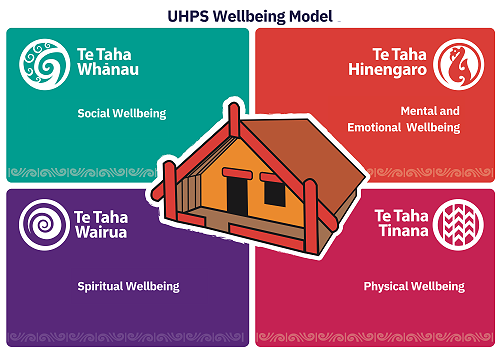
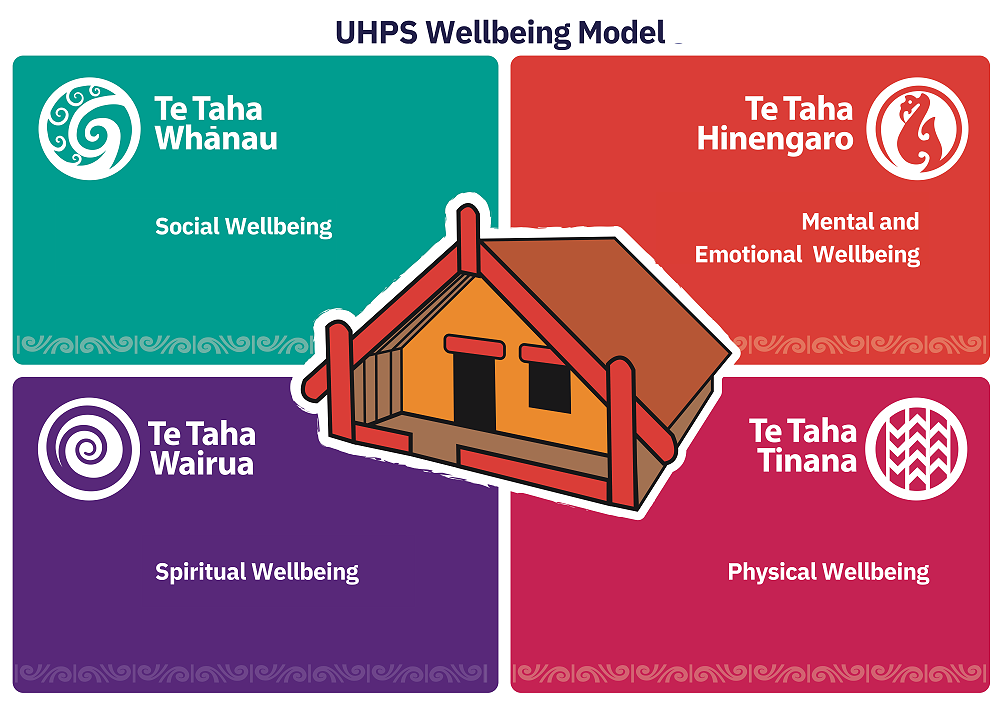
In 1982 Dr Mason Durie developed a wellbeing model specific to New Zealanders called the Whare Tapa Whā. In New Zealand, a Whare is a house or dwelling. Tapa Whā is a square, in this case a reference to the four areas or pillars within the Whare.
As with most buildings, a whare is only strong when all four of its pillars are strong. If one pillar is not looked after and becomes weak, this can have an impact on the rest of the Whare and negatively impact the structural integrity of the building.
Our learners come to understand that their wellbeing is much the same. Without looking after the four main areas of wellbeing as detailed in the Whare Tapa Whā, our wellbeing as a whole can be adversely impacted.
The four pillars of the Whare are as follows;
Taha Tinana, our physical well-being. This includes things which directly affect our physical wellbeing such as sleep, nutrition, and relaxation as well as being active through sports and hobbies.
Taha Whānau, our social wellbeing. This covers our connections to and relationships with other people including our family or whānau, our classmates and the people in our school.
Taha Hinengaro, our mental wellbeing. This refers to the way we think and feel about people and the world around us, including how we cope with the challenges and stresses of life.
Taha Wairua, our spiritual wellbeing. In a school context, this includes our cultural background, family beliefs and knowledge and how we are connected through our school values.
Gallery