Fostering a Research Culture - The Wellington College Research Centre
In a March 2024 blog post, we shared news about our initial mahi as a research-invested school, a school that values and makes a strategic commitment to research.
At Wellington College, this takes the form of activities where our teachers consume knowledge and also generate new knowledge. In this article, we share an update about our activities and progress in developing our research centre.
We established the research centre at the start of 2024, which provides an umbrella of sorts, under which sits a host of activities and initiatives connected to:
Fostering a research culture
Student experience and outcomes
Teacher’s professional development
Conference and information events
Community engagement and published output
Collaborative relationships with external entities
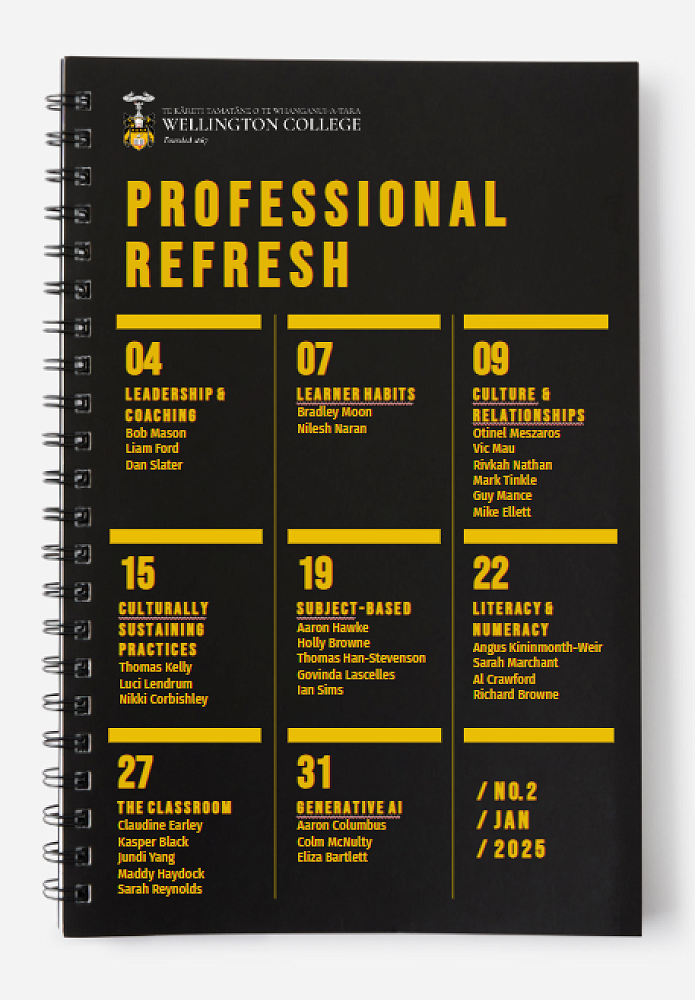
Last year, we ran the second iteration of the Professional Refresh, an activity that exists to create the time and mental space for teachers to engage with professional readings. Teachers choose the reading, take leave from school to read, write a reflection, and apply their learning to the classroom context. Over thirty teachers engaged in the Professional Refresh last year. We collated their written reflections into the second Annual Collection, which we published in January 2025. You can download the collection here. The third iteration of the Professional Refresh is now underway, with over 40 teachers having opted into the activity.
We also introduced an action research programme last year. While the Professional Refresh is where our teachers consume knowledge, action research is focused on generating new knowledge. Styles (1999) defines a teacher inquirer as someone who ‘searches for questions as well as answers’, which is a precursor of positive change. Teachers conduct informal inquiries as part of their daily practice to resolve issues, situations, or problems in the classroom and their practice. Action research is when we formalise this with a structure and support data collection and writing up the findings.
Last year’s action researchers focused on a range of topics. These included the impact of furniture arrangement on classroom culture, senior students’ use of generative AI, the staffing structures that best support learning in junior technology, habitualising evidence-based study strategies, and developing a bicultural graduate profile. As always, utility is a key consideration for us, and to that end, we collated the research reports and published these in the first issue of our action research journal. We are excited to share the journal (for download here). It also contains guest contributions from the presenters at the education conference we ran at Wellington College last October.
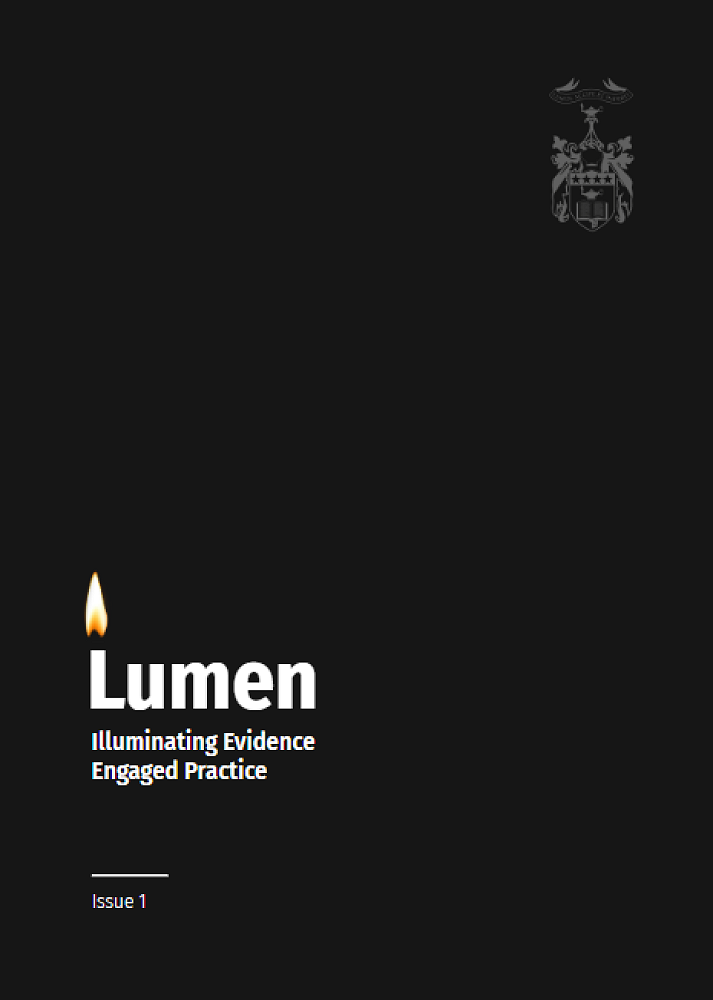
We decided to call our action research journal Lumen, drawn from our school’s motto “Lumen accipe et imperti” - receive the light and pass it on. This beautifully reflects our shared commitment to fostering knowledge, character, and service. It is echoed too in “Tiaho te ao, tiaho te ao mārama” - let the world shine, let the world of light shine - affirming our collective belief in enlightenment and the power of sharing learning.
We also have two people involved in the International Boys’ Schools Coalition action research programme, which adds to our research activities. Working remotely in small groups, IBSC action researchers ‘engage in discussion, offer informed reflection, and generate and evaluate innovative ideas about best practices in the education of boys.’ It is a rigorous and impactful international programme of research and we are excited to have our teachers participating in this. Serena Lawrence has completed and submitted her report, Building Belonging in 16-Year-Old Boys Through Peer Tutoring in the Classroom. Nilesh Naran is in the early stages of his action research project, which is focused on facilitating boys’ executive foundation and self-regulation in the classroom.
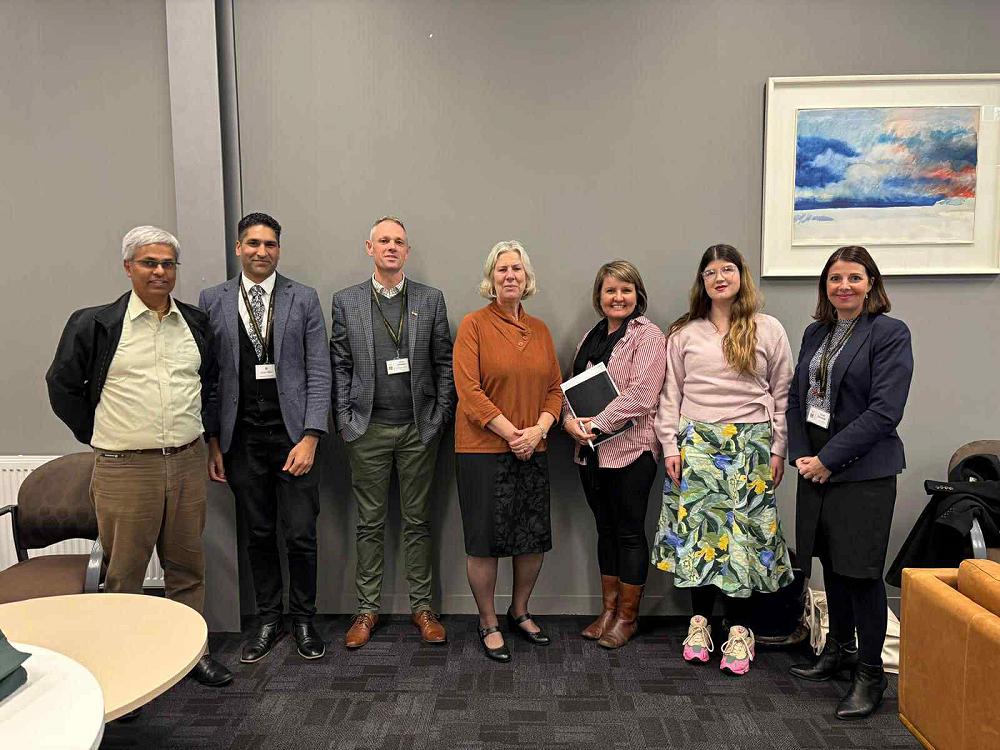
The second iteration of the action research programme is underway. Ten staff have opted into the programme for this year. Their mahi to date has focused on framing their research question, engaging with the literature, and methodology. Some of the topics this year include neurodiverse learners, using visualisers in Mathematics, enthusing boys to read, AI literacy, and targeted strategies to support learners in Mathematics. We recently hosted Sue Cherrington (Te Herenga Waka - Victoria University of Wellington) at Wellington College. Sue is a lecturer in the Education School and is an expert in school-based action research. She facilitated an excellent workshop about the processes of action research, which set our group up to finalise their planning and move to the action phase (data collection) next term.
Strengthening our position as a research-invested school creates the conditions for our teachers to thrive and influences the experiences and outcomes of our students. Part of our mission at Wellington College is to look outwards and uplift the community. Sharing our mahi via publications and when colleagues from other kura visit us supports this, as does seeking collaborations. To this end, we have connected to several research-invested schools in Australia (Brighton Grammar School in Melbourne / The Scots College and Barker College in Sydney / Churchie in Brisbane) and the Australian research-invested schools (RIS) network. This is a loose affiliation of over 70 research-invested schools. Our collaborations with BGS and Churchie have driven our effective classroom management reset and learner habits programme. We have worked closely with Mark Dowley at BGS and enjoyed hosting him at Wellington College in Term 1. He facilitated workshops based on his best-selling Classroom Management Handbook and has continued to support our mahi.
After attending the RIS (Aus) annual conference in July 2024, we decided to establish a sibling network in New Zealand. This was launched in Term 1 with the first online hui, at which colleagues from twenty schools were in attendance. Hugh Chilton (Scots in Sydney) presented to the group about the place and influence of research-invested schools. We organised the second online meeting of the year in June and hosted Tim Scott from Barker College in Sydney, who talked about their activities and how schools can get started in this space. We also had Jude Arbuthnot from Westlake Boys’ High School in Auckland share the details of their teacher and student action research programme. James Heneghan from Long Bay College talked about Mahi Tahi, their trust-based classroom observation and collaborative post-observation conversations initiative. Our Research-Invested Schools NZ network provides a platform for schools to share and collaborate.
Similarly, if schools are to collaborate and share, they need to come together in person. This was behind the education conference we ran in October of last year (Uniting Minds, Shaping Future) which brought together the eight New Zealand-based presenting groups at the IBSC Annual Conference in London to share their mahi with a local audience. Educators from over thirty kura, from Invercargill to Auckland, attended the one-day conference at Wellington College. As mentioned above, six of the presenters wrote bite-size summaries of their workshops, which we included in Issue 1 of Lumen.
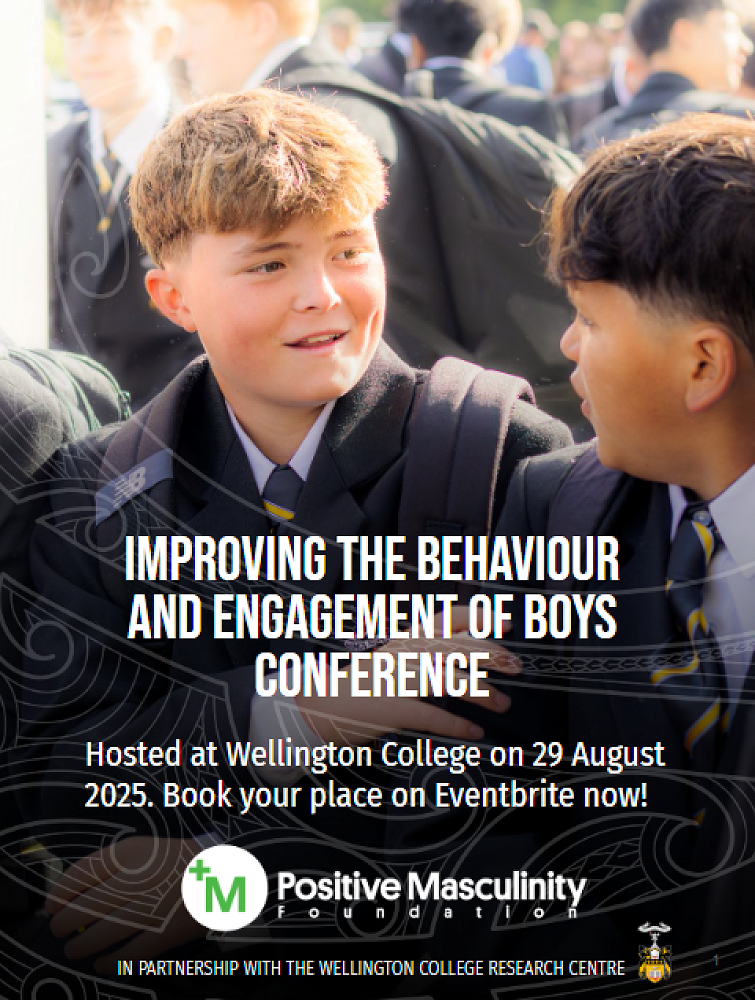
The conference was a huge success and provided the framework by which to organise our 2025 conference. This takes place on 29 August and is a collaboration with the Foundation for Positive Masculinity in Australia. It focuses on improving the behaviour and engagement of boys. Speakers include Dr. Ray Swann, Dr. Mark Dowley, Ingrid Howren, and a keynote by Professor Mark Englar-Carlson, co-director of the Center for Boys and Men and California State University. The conference is open to educators from all contexts and is being promoted as an Australasian conference. Tickets are available on Eventbrite.
Our journey as a research-invested school continues to deepen and broaden, enriching both our teaching practice and the student experience. Through initiatives and collaborations with schools in Aotearoa and Australia, we are building a culture where inquiry, reflection, and evidence-informed practice are the norm. Our research centre provides a strong foundation for this work, while our publications, conferences, and networks allow us to uplift others and be uplifted in return. As our Headmaster Mr. Denham states in the foreword to Lumen, ‘Our country is at the end of the world. We are too small to operate in isolation. We must unite and come together to share every modicum of knowledge that we have.’ We look forward to continuing this mahi together, as we shape a more thoughtful and impactful future for education.
This article can also be found on our college blog 'At the Collface' on our school website.