
Enabling teachers to contribute to the ‘knowledge economy’: Our action research initiative
‘The main goal of action research is to address local-level problems in practice with the anticipation of finding immediate answers to questions or solutions to those problems.’ (Mertler, 2018).
Action research is a process by which teachers investigate an educational situation or issue they want to change. The value of action research is that it is conducted by ‘insiders’, those closest to the situation being studied. It gives teachers the power to generate knowledge and share that knowledge for a wider impact. Rather than only being passive consumers of knowledge, teachers become the ‘knowledge generators’ and contribute meaningfully and impactfully to the ‘knowledge economy’. Mertler (Mertler, 2018) identifies the improvement of educational practice and the professional growth and empowerment of the teacher as being the benefit of engagement in action research. He (Mertler, 2013) also rightfully argues that engagement with action research by teachers in their settings and investigating their problems of practice is the ‘most appropriate way to address those problems.’
At the heart of our drive to foster a research and evidence-informed culture at Wellington College, is our newly established research centre. This provides the conditions by which we have introduced a range of initiatives. One of these is the Professional Refresh, whereby teachers can take leave to engage in professional reading that they can reflect on and apply to their practice.
Inspired by what we had seen in our research of schools engaging in action research, earlier this year, we invited teachers to participate in an action research programme at Wellington College. We are particulalry grateful to Aylesbury Grammar School in Buckinghamshire (UK) for sharing their experiences and resources. This involved participating teachers identifying a problem, issue, or situation and using the action research structure and processes to investigate and find solutions. As with all initiatives in the research centre space, the key approach is that staff opt-in, rather than anything being imposed. This is key to buy-in and connects to our other research centre tenant, which is to start small and build up.
The response from teachers to the initiative was positive, the result being that we now have several research projects underway. Collectively, these form our first cycle of action research at Wellington College. Some might only run through this first cycle, while others, depending on findings, might well extend into a second cycle next year.
These are the research projects being conducted by our action researchers:
How desk set-up and furniture affect the classroom environment
Small daily habits that help students support their learning
The use of visualisers to assist in delivering and enhancing student engagement and productivity
The paradox of teaching about conscientious objection and the pervasive violence in gaming culture.
Senior students’ use of generative AI at Wellington College
Reviewing the structure of the junior Technology curriculum
Partnering with mana whenua to develop a Wellington College Graduate Profile.
As we entered the first action research cycle, we wrapped the following principles around our mahi. Firstly, the research is based on critical reflection and investigation into the teacher’s practice. Three of the projects are being conducted by members of our Strategic Leadership Team and two of these are taking a broader school-wide focus. For the most part, though, the projects are directly related to the practice and classroom context of the researcher. This principle serves to ensure the immediate relevance of the teacher’s research and the impact and implementation of the findings. Research can be a solitary and lonely endeavour, hence the second principle of our action research process is a focus on collegiality and mentorship. This relates to the facilitatory and supervisory role that Dr. Aaron Columbus (DP Teaching & Learning) takes with each participant, but equally, the collegiality of coming together to share progress and experiences. Finally, we share our research findings with other teachers (within and without the kura) and the community. This also ensures utility and a wider impact with the knowledge that we create.
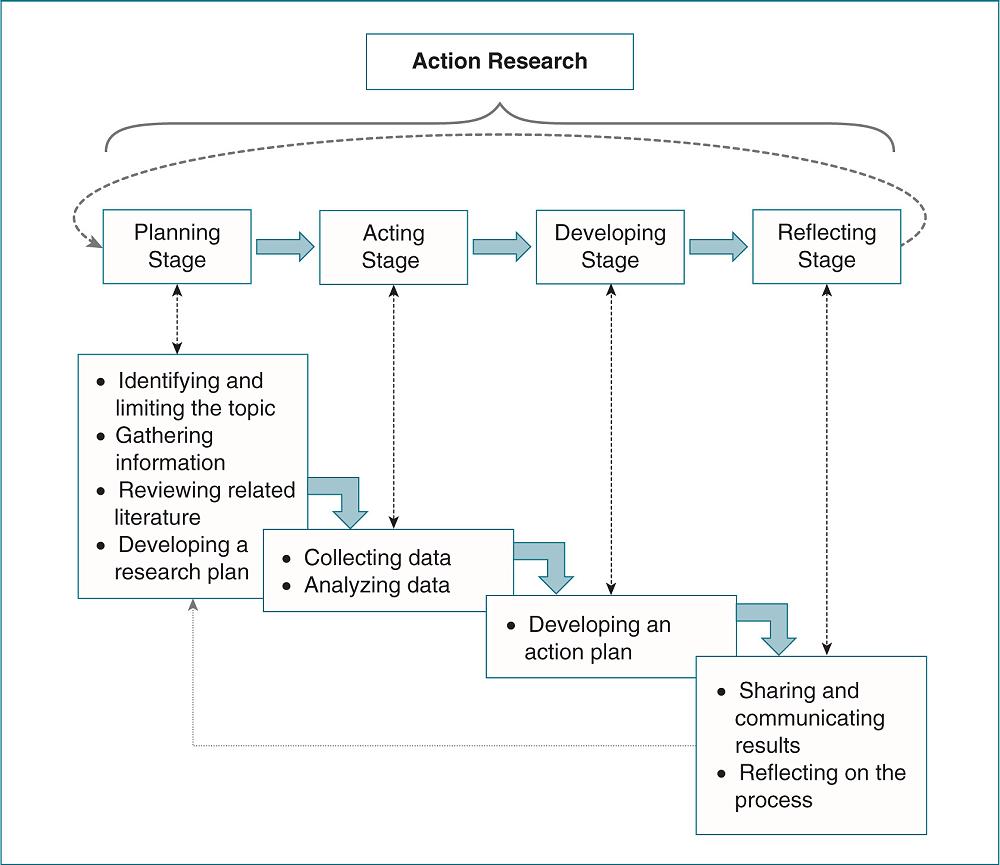
It is important to ensure rigour in any action research programme. This is achieved via engagement with the published literature and the structures by which the researchers work. We chose to implement Mertler’s action research process (below). This provides the framework by which our researchers formulate their research question and plan, their data collection and analysis of that data, and the reflection and writing up of the findings.
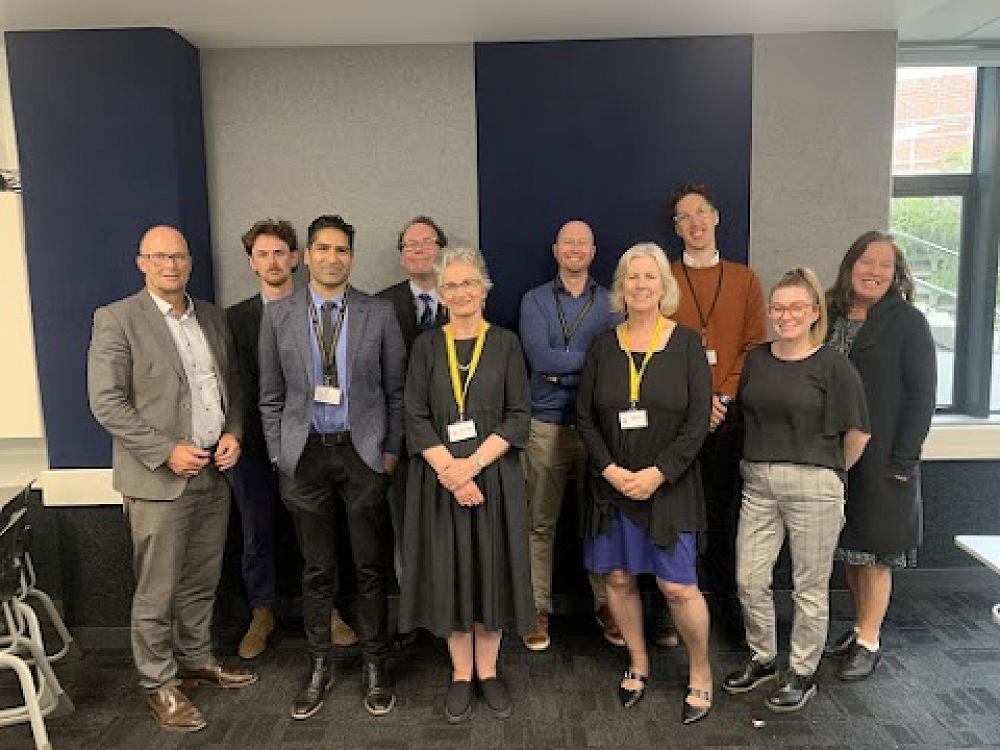
To support the planning stage and add an additional rigour to our work, we connected with Sue Cherrington and Kate Thornton (lecturers in the Education School at Te Herenga Waka - Victoria University of Wellington). They facilitated a workshop at Wellington College, which was focused on developing research questions, ideas about different data collection approaches, and the processes of action research more generally. This was an illuminating and energising experience for our action researchers.
As mentioned, collegiality is an important part of the action research initiative. To that end, we come together for working lunches on occasion, most recently in Week 3 of this term. This presented an opportunity to share work-in-progress updates and discuss the next steps for each project. We also talked about our experiences through the programme to date. Gregory Hine (Hine, 2013) commented that the ‘solutions-based focus, emphasis on fostering practitioner empowerment, and pragmatic appeal of action research, collectively render action research a worthwhile professional development activity for teachers.’ Following the working lunch, we asked the action researchers to share what they enjoyed about their action research. The selection of comments below echoes Hine’s argument about the positive and enriching professional experience of action research.
"I have really appreciated the time to look at the literature around Technology education and especially reading about the rationale behind the choices of the people who came up with the Technology curriculum. The result of this has been a significant shift in how I think Technology can be best taught and learned." (Thomas Han Stevenson)
"Enjoying collaborating with colleagues and having the opportunity to explore different perspectives through the literature." (Holly Browne)
"I'm enjoying how it encourages me to pause, and take a moment, to deliberately think about how my classroom is set up. Small changes can make a big change to classroom culture and help me literally see my teaching from students' perspectives." (Luke Williams)
"Research for serving teachers is a vital accelerant for our core business of pedagogy. I'm impressed by the rigour of thinking that is required and the transferable knowledge I'm developing to help teaching staff understand beyond "normal" classroom duties. The action research process has also sharpened my personal research thinking, resilience and general knowledge." (Richard Browne)
"Engaging in Action Research gives me confidence to move forward with an initiative or strategy with the piece of mind that it has gone through a rigorous process. By gathering both student and teacher voices, I can be more sure that the resulting work will be suitable for the community that it is designed to serve." (Nilesh Naran)
"This process has enabled me to more rigorously document the journey of developing a school wide project that includes multiple stakeholder voices and perspectives, particulalry in partnership with mana whenua. Not only does action research strengthen this work, but it becomes a vehicle in which to share our journey with our wider community." (Nikki Corbishley)
As we approach the mid-point of the third term, most of our researchers are in the midst of data collection. We will likely invite Sue Cherrington and Kate Thornton back early next term to facilitate a workshop on writing up the research findings. We plan to collate the research articles and publish a journal collection. This will celebrate the work of our researchers but also makes it available to other educators. We also plan to have the researchers present their findings to our staff at a Friday morning PLD session later in Term Four.
As we go forward, action research will be at the core of our ever-growing research culture at Wellington College. We look forward to sharing the journal collection early in 2025.
Contact Dr. Aaron Columbus if you are interested in our action research initiative. We would be more than happy to share our resources with you.
References: