Growing leaders, the Coll Way.
Carlyon and Fisher were right in their argument that part of the role of school leaders in growing leadership from within is to provide teachers with various opportunities to experience leadership.
They go on to explain that It is important to identify the opportunities and to strategically facilitate their organisation while maintaining supportive professional relationships and a positive school culture (Carlyon & Fisher, 2013). What should be added to this is the importance of providing opportunities for aspiring leaders to learn about leadership. This gives the foundation by which they can navigate successfully any role that they take on. This has been the basis of our approach to the Wellington College Leadership Institute (WCLI) in 2024.
The WCLI is a structured programme for learning about leadership. We identified this as a gap in our professional learning and development programme, from which we developed the concept of the WCLI. We initially aimed for a group of 10-12 participants. We received 24 applications in late 2023, which validated the need that we believed we needed to meet. We decided on a group of 20 and started a journey in February that concluded in late November. In this blog post, we share the mechanics behind the WCLI, aspects of the experience, the voice of the participants, and our plans for the second iteration in 2025.
From its inception, the purpose of the WCLI has been threefold. Firstly, we believe it is essential to develop our leadership capacity in those holding leadership positions so that they can deepen and apply their learning about leadership. Equally, we need to ensure that we have a strong pool of potential and aspiring leaders ready to take up internal opportunities when they come along. Secondly, and connected to growing leadership capacity is the responsibility of senior leaders to provide opportunities for staff to learn about leadership. This can take a variety of approaches, ours being a wide lens that is less skills-based than thinking about concepts and theory of leadership. This should be part of any professional learning and development programme in a school. The third focus for us, and this may be unique to our context, is an outward focus that is to challenge iniquity in Aotearoa. If any of our WCLI participants go on to take up external leadership opportunities elsewhere, then this is a positive for the wider community.
The WCLI course was structured around two theme-based workshops each term. These were facilitated by both external presenters and senior leaders from our Teaching & Learning team. The external presenters were people that we respected professionally and whose mahi we admired. Their outlook also resonated with us and we saw an opportunity to support the messaging behind our strategic focus at Wellington College. The intention is that the participants are people of influence and can carry those messages beyond the WCLI cohort.
We initiated the course in mid-February with a panel discussion focused on the question, ‘What is leadership?’ The panel comprised Paula Wells (Principal, Samuel Marsden Collegiate), Gerard Tully (former Rector, St Patrick’s College Silverstream), and our Tumuaki, Glen Denham. This was a perfect place to start and we were all surprised at the candour and vulnerabilities of the panel, which certainly set the tone and tenor for the rest of the sessions.
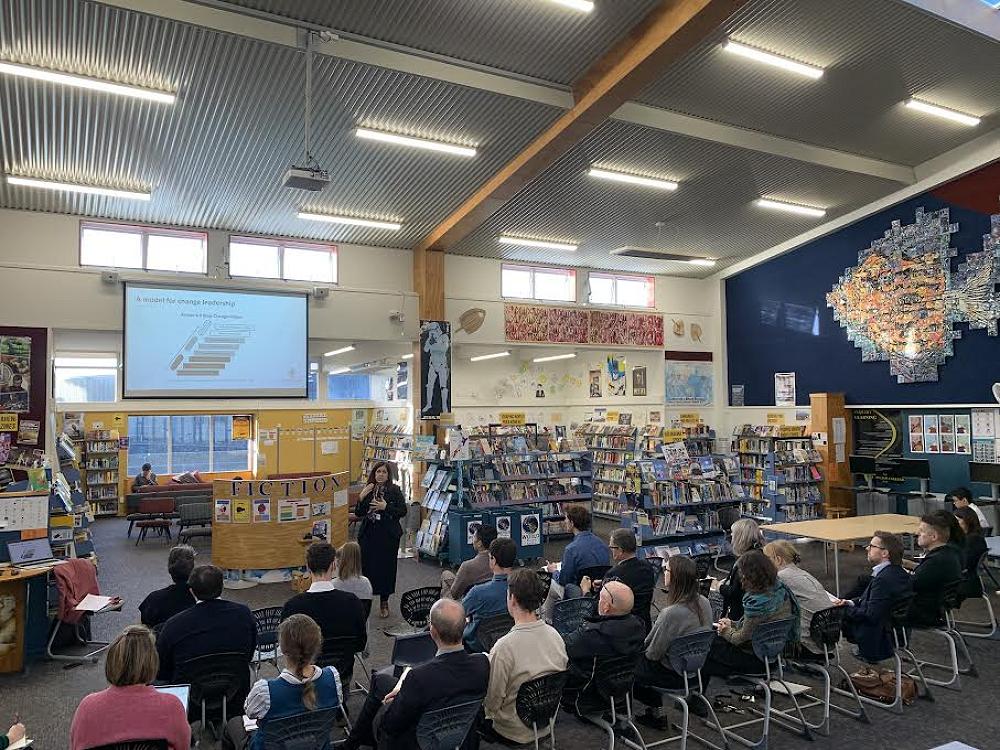
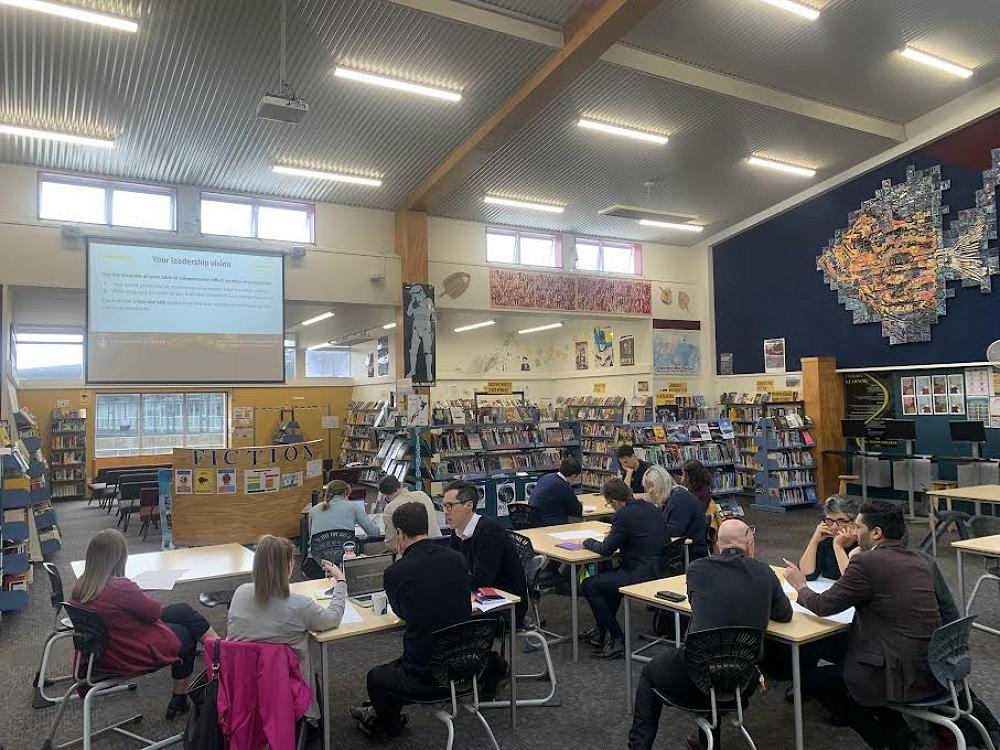
The workshops included a wide range of themes and were facilitated by outstanding education leaders.
Strategic Leadership - David Ferguson, Headmaster at Westlake Boys’ High School
Leading change - Nicole Billante, Deputy at Principal Christ’ College - now Principal of Iona College
Leading culture - Gerard Tully, former Rector St Patrick’s College Silverstream
Relational relational leadership - Mike Savali, Rector, St Patrick’s College
Culturally sustaining leadership - Nikki Corbishley, Deputy Principal, Wellington College
Habits of effective leaders - Aaron Columbus, Deputy Principal, Wellington College
Our final workshop was focused on reflection on the year’s learning and looking forward to implementing that learning. Participants were asked to reflect on the following questions:
What resonated with me?
What challenged me?
What surprised me?
What reaffirmed something I knew or held true?
Then asked to look forward, they considered what they would keep doing, start doing, and stop doing, as they continue their leadership development.
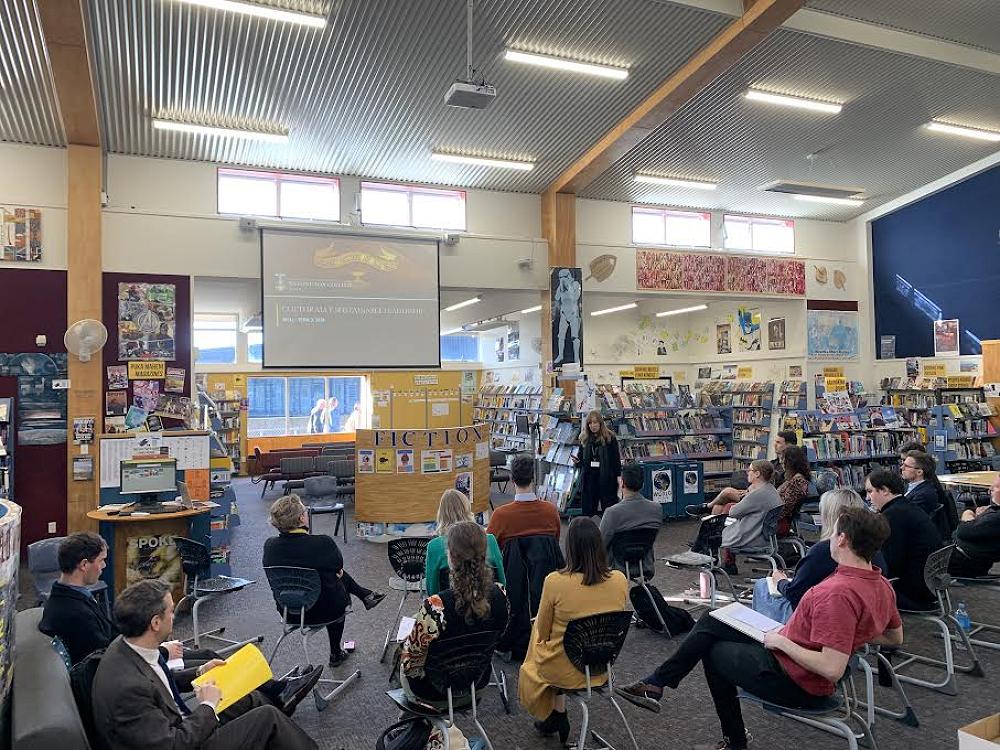
Many of the WCLI participants identified the openness of the presenters as the facet of the course that they particularly liked - ‘Hearing the stories of people in leadership roles currently. I appreciated hearing what drives them, their clear sense of calling, honesty and integrity.’ / ‘I liked hearing from a range of leaders. I liked their candour in sharing. I liked being in a group with colleagues.’ / ‘The honest and open dialogue and stories from all of the presenters.’ / ‘The speakers shared from their experiences and from their hearts.’
Each workshop was supported by a reading, which the participants were asked to engage with before the workshop. We made sure that these were relevant, accessible, and manageable, particularly given the WCLI was an add-on to an already busy workload for the participants. This is an example of one we assigned for the leading change workshop. In this piece, Martin Matthews talks about leading change in schools.
A core element of the WCLI course was reflection and the idea that reflection is a habit that needs to be honed. This was primarily facilitated by a digital journal. This provided the space to reflect on the reading and workshop and was supported by each participant being aligned with a senior leader and catching up following a workshop. The senior leaders were not considered to be the experts in the partnership, rather they were to provide the conditions by which the participants could further explore their learning and think about how to translate this to their leadership practices. One of the participants said this about the mentor sessions in their end-of-course survey response - “(I) Loved the meeting time with my buddy. That's been a highlight and definitely should stay if any changes happen (to the course in 2025).”
The quantitative questions included in the survey reflected a massively positive and impactful experience for the participants. All participants strongly agreed that the WCLI learning experience had enhanced their knowledge of effective leadership. Most also strongly agreed that they had gained greater clarity about their leadership strengths and areas for improvement and now have a stronger understanding of how their leadership can influence others. Most strongly agreed that they were better equipped to handle challenges or uncertainties in leadership roles and felt more prepared to take on leadership roles.
We were happy to see the following general comments made by the participants:
‘I just found the whole course very empowering!’
‘I am deeply grateful for the opportunity to be part of this programme. Being surrounded by inspiring individuals and engaging in such insightful workshops has been a truly enriching experience. The knowledge and perspectives gained have been invaluable, and I sincerely appreciate the chance to grow both personally and professionally.’
‘From what I have learned this year I think that embedding the changes of habit, perspective, style etc. next year would be the most useful thing the school could do to support me but also raise the impact of the WCLI generally.’
‘I enjoyed the selection of readings, the varied presenters, and the topics over the year. There was a good sequence to the topics and great connections between the readings and the topics being presented.’
‘I really appreciated this opportunity to attend this WCLI. I would recommend it to aspiring leaders.’
The participant feedback has helped us refine our approach to the course next year, such as ensuring a balance each term of an external presenter-based workshop, followed by a session that provides more opportunities for collegial reflection and collaborative work.
The 2024 participants were unanimous in their request for further opportunities for them to continue their leadership learning journey. For example, one participant said, ‘I am keen to explore further opportunities beyond this year and would like to attend additional workshops for professional development. I am also interested in engaging with more research-based professional development learning (PDL) next year to deepen my knowledge and practice.’ Another responded, ‘Yes please! Perhaps this is where ongoing coaching groups could come in to support ongoing development after the initial year. Optional attendance for speakers next year would be great too.’
So, what next for the WCLI? The intention was always for this to be a sustainable initiative. We opened applications early in Term 4 and have thirteen participants confirmed for the second cohort. We also hope to take on four to five external participants from other schools. The experience of this year and positive feedback from the participants has supported our planning for the second iteration. We’re excited to support the development of leaders at Wellington College in 2025.
References:
M. Adam Carswell, ‘Developing the Leadership Capacity of Teachers: Theory to Practice’, Journal of School Administration Research and Development, Volume 6, Issue 1 (2021).
Anthony Fisher & Tracey Carlyon, ‘School leaders growing leadership from within: A framework for the development of school leaders’, Waikato Journal of Education, Volume 19, Issue 2 (2014).
Kristin Shawn Huggins, ‘Developing Leadership Capacity in Others: An Examination of High School Principals’ Personal Capacities for Fostering Leadership’, International Journal of Education Policy and Leadership, Vol. 12 No. 1 (2017).