All You Need To Know: the Hostage, the Demands, the Background,
1: Indonesian security forces ready to rescue hostage pilot but New Zealand wanted plan ditched 2: Deadlier and more media savvy, separatist rebels evolve in Indonesia's Papua 3: Factbox-Separatist insurgency in Indonesia's Papua region
Indonesian security forces ready to rescue hostage pilot but New Zealand wanted plan ditched
Key points:
- Papuan police say Mr Mehrtens is in "good health"
- Authorities say they are prioritising negotiations with the rebels
- The rebels say they want UN-mediated talks with New Zealand and Indonesia
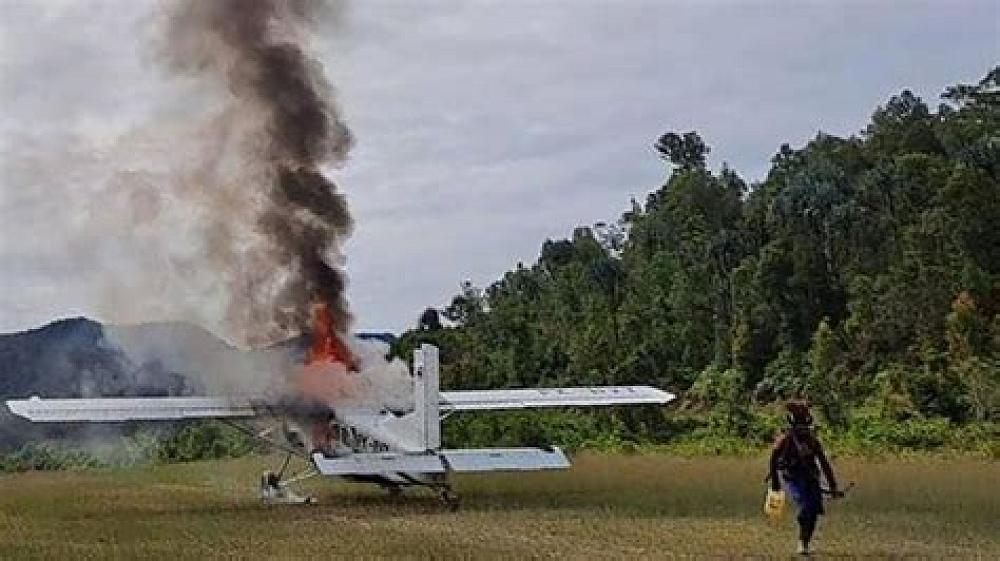
Indonesia has revealed its security forces were about to launch a rescue mission for a pilot held hostage in Papua but New Zealand authorities asked them to abandon their plans in order to avoid violence.
Indonesia's Coordinating Minister for Politics, Law and Security, Mahfud Mahmodin, said his forces knew the exact location of New Zealand pilot Philip Mehrtens, who was captured two weeks ago by separatist rebels after he landed a plane in Papua's remote highlands.
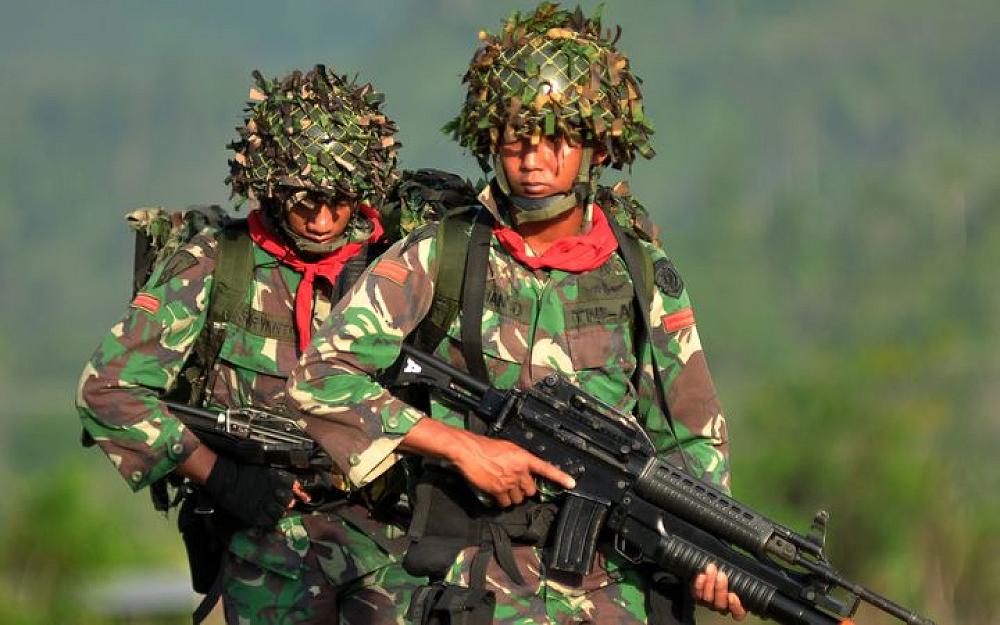
Soldiers almost moved in to attack the rebels from the West Papua National Liberation Army, until New Zealand authorities requested there be no acts of violence to free its citizens, he said.
New Zealand's government wanted to prioritise the Susi Air pilot's safety, and a military attack could become an international matter.
Instead, Indonesia will negotiate with the rebels to release the pilot, Mr Mahmodin said.
The rebels said they were refusing to release Mr Mehrtens until Indonesia grants independence to the Papua region.
Mr Mahmodin said he understood New Zealand's decision.
"We already knew the place [where the pilot was being detained], at what coordinate points, but as soon as we were about to move, the New Zealand government c"Therefore, we are still waiting, hopefully there will be a resolution soon."
Papua police chief Mathius Faakhiri told Indonesian media Mr Mehrtens was in "good health".
"Currently, pilot Philip is still in the hands of the KKB [the Papuan armed group] led by Egianus Kogoya and is in good health," he said.ame here asking for no acts of violence," the minister said
Mr Faakhiri said authorities were still prioritising negotiations in order to avoid violence and casualties.
He said the priority was the safety of the pilot and the members of military and police involved.
Rebels push for UN talks
The West Papua National Liberation Army, or TPNPB, wants the UN Secretary General involved.
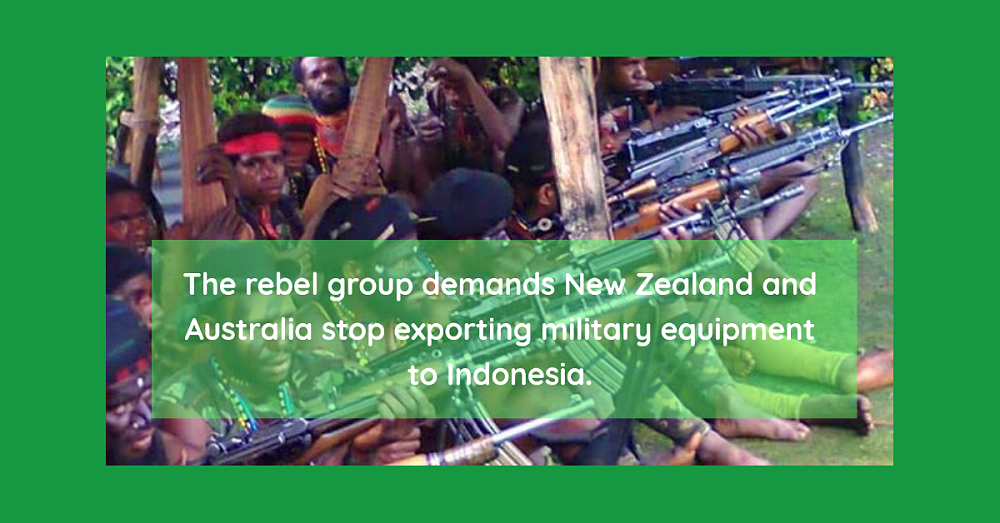
The rebel group has also demanded New Zealand and Australia stop exporting military equipment to Indonesia.
Akoubou Amatus Douw, an Australia-based spokesperson for the TPNPB, told the ABC they wanted the UN to mediate talks between New Zealand, Indonesia and TPNPB.
"That's our position at the moment," he said.
"He [Mr Mehrtens] is part of our … people in the Pacific. We like to, you know, save his life. We respect human values, human rights for every individuals, according to the United Nations charter."
Violence between Papuan separatist groups and Indonesian security forces has escalated in recent months.
Indonesia's Papuan provinces were under Dutch control until the 1960s, and then incorporated into Indonesia after a United Nations-sponsored vote that many Papuans say was a sham.
A low-level insurgency has festered ever since.
By Indonesia correspondent Anne Barker, Erwin Renaldi and Mackenzie Smith
Posted 44m ago
https://www.abc.net.au/news/2023-02-23/indonesian-security-forces-rescue-hostage-pilot-philip-mehrtens/102013054
Deadlier and more media savvy, separatist rebels evolve in Indonesia's Papua
JAKARTA, Feb 23 (Reuters) - Egianus Kogoya, the dreadlocked rebel behind the kidnapping of a New Zealand pilot this month in the highlands of Indonesia’s Papua region, is at the vanguard of an increasingly dangerous and media-savvy insurgency for independence.
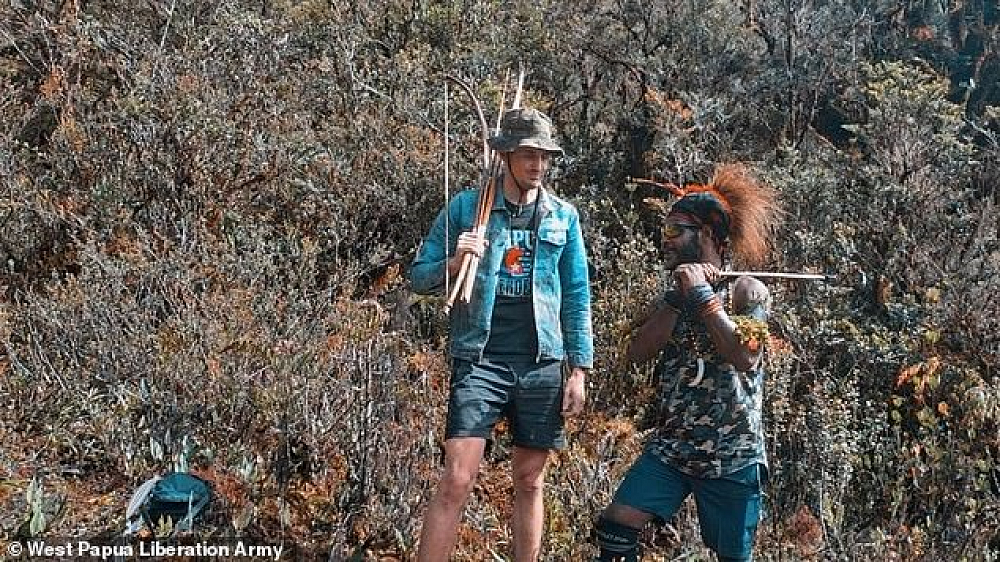
Separatist rebels kidnapped New Zealand pilot Philip Mehrtens, 37, after he landed his small plane in the remote Papuan highlands on Feb 7.
Sitting in the cockpit of the plane, Kogoya, wearing a denim jacket, bone necklace and mirror shades, with a hand draped over a rifle, appeared to relish posing as his men documented their most high-profile kidnapping to date.
In a series of videos, Kogoya demanded the resource-rich region's independence in return for Mehrtens' release.
Fighters in the Indonesian, western half of New Guinea island have for decades waged a low-level battle for independence, but Kogoya and his gang have emerged as especially dangerous and unpredictable.
"What we are seeing is younger, new leadership among local rebel groups that is more aggressive and not necessarily strategic in the long term," said Deka Anwar, from the Jakarta-based think tank, the Institute for Policy Analysis of Conflict (IPAC)
The security ministry did not respond to requests for comment on the separatists but military spokesperson Kisdiyanto said attacks against Indonesian sovereignty by "a few" separatists were being handled.
The military has said it is preparing for a "law enforcement operation" but only as a last resort if negotiations to free Mehrtens fail.
Separatists say their fight is legitimate because former colonial power the Netherlands promised the region it could become independent before it was annexed by Indonesia in 1963.
Indonesia says Papua is its territory after a 1969 vote supervised by the United Nations, in which 1,025 handpicked people unanimously backed its integration.
More than a half a century later, rebels are still fighting the Indonesian republic.
An estimated 500 fighters identify as members of the West Papua National Liberation Army (TPNPB), the armed wing of the Free Papua Movement (OPM).
Loosely organised and geographically fractured, the TPNPB lacks cohesion and a central leadership and command.
Instead, units in different areas operate under individual commanders, like Kogoya, who hails from a family with rebel connections - some relatives were behind the kidnapping of several foreign researchers in 1996.
For years, the separatists mounted small attacks with minimal casualties but Kogoya and his group opened a bloody new chapter in 2018 when they attacked a road-construction project killing 21 workers.
Indonesia launched a security crackdown in response, vowing to wipe out the rebels with hundreds of extra troops.
The violence forced thousands of villagers to flee, triggering a humanitarian crisis in which more than 160 people died of sickness and starvation. But in the rugged Papuan highlands, the security forces failed to track down Kogoya and his men.
SOCIAL MEDIA TOOL
Rebels who once brandished bows and arrows are now increasingly carrying guns, including automatic rifles seized in raids on the security forces or bought on the black market, and conducting more frequent and more lethal attacks, the IPAC said in a July report. Fifty-two members of the security forces and 34 fighters were killed between 2018 and 2021, it said.
The rebels are also taking advantage of modern communications.
Cahyo Pamungkas, a researcher from the National Research and Innovation Agency, said the separatists are using social media to get their message out.
"Social media is a tool of resistance to deliver the stories from Papua because national media is mainly dominated by perspectives from Jakarta," he said.
"They are really media savvy," said IPAC's Anwar, "They want to show they are not a rag tag rebel group but have some structure, at least at the local level."
TPNPB spokesperson Sebby Sambon said the New Zealand pilot was being well looked after and treated as "family".
"This was his idea but we are responsible for controlling the situation," Sambon said by telephone, referring to Kogoya's seizure of the pilot.
Sambon vowed more violence unless the separatists' demands were met, saying the TPNPB planned a "total revolution" by 2025 with widespread destruction and bloodshed.
The government did not respond to requests for comment on the rebel threat of escalation.
Some rights activists criticise the government's response to the insurgency.
A project to get satellite coverage over the area that would help the security forces pinpoint Kogoya's location has become embroiled in graft, a lawmaker with knowledge of the matter told Reuters on the condition of anonymity.
There are also questions about overall responsibility for policy with the government flagging a "softer approach" while the military has tended to deploy more troops in response to attacks.
"It's not quite under the control of the civilian government there," said Marzuki Darusman, a former attorney general turned human rights campaigner.
"It's become military turf and that doesn't help."
Additional reporting by Ananda Teresia; Editing by Robert Birsel
https://www.reuters.com/world/asia-pacific/deadlier-more-media-savvy-separatist-rebels-evolve-indonesias-papua-2023-02-23/
By Kate Lamb. February 23, 202312:08 PM GMT+11Last Updated 5 hours ago
————————————————
3: Factbox-Separatist insurgency in Indonesia's Papua region
Published on February 23, 2023 12:08 PM AEDT
JAKARTA (Reuters) - The kidnapping of 37-year-old New Zealand pilot Philip Mehrtens by separatist rebels in Indonesia's easternmost region of Papua has thrown a spotlight on the decades-long, low-level insurgency in the remote, resource-rich area.
Here are some facts about the region and its conflict:
THE GEOGRAPHY
- The western half of New Guinea island is Indonesia's easternmost region, commonly referred to as Papua. Indonesia has divided it into six provinces, one of which is also called Papua.
- The population of the Papua region is about 4.3 million.
- Though rich in gold, copper, timber and natural gas, the region is one of the poorest, most underdeveloped in the country.
THE HISTORY
- The former Dutch colony was bought under Indonesian control in 1969 through a vote supervised by the United Nations.
- Separatists say that vote, which involved about 1,000 people who chose unanimously to join Indonesia, did not reflect their aspirations.
- Indonesia says the vote was in accordance with international law, but a low-level campaign for independence waged by the Free Papua Movement (OPM) has simmered ever since.
INSURGENCY
- Disparate armed factions make up the West Papua National Liberation Army (TPNPB), the military wing of the OPM.
- There are an estimated 500 TPNPB fighters who in recent years have conducted more frequent and deadly attacks, although generally small in scale.
- The Indonesian government officially designated armed separatists in Papua "terrorists" in 2021.
- The government calls armed groups in the region "Kelompok Kriminal Bersenjata" or KKB, which translates as "armed criminal groups".
HOSTAGE INCIDENTS
- Separatists have taken foreigners hostage in the region before, most notably in 1996, when a group of 26 wildlife researchers, including four Britons and two Dutch, were kidnapped in an area called Mapenduma.
- Several hostages were released but 11 of them were held for four months. Indonesian security launched a military operation, during which nine of the hostages were rescued and two were killed.
- In 2015, the rebels seized two construction workers but released them days later, reportedly for ransom.
- In 2017, armed separatists occupied several villages, threatening to disrupt operations at the nearby Grasberg copper mine. The fighters left the area after a military operation.
ATTACKS
- Conflict in the region has escalated significantly since 2018, largely because the separatists have been able to get their hands on better guns through raids on army posts and the black market.
- In the highland area of Nduga, a separatist group killed 21 road construction workers in 2018. Other attacks have followed, usually targeting military officers and civil servants.
- In April 2021, rebels killed a regional intelligence chief in an ambush in the highlands.
- Authorities have started to conduct more air strikes in fighting the rebels, analysts say.
GOVERNMENT APPROACH
- The government has vowed to take a softer approach but the insurgency has intensified regardless.
- In response to deteriorating security, the military has tended to deploy more troops, leading to more resentment among indigenous Papuans, rights groups say.
(Reporting by Kate Lamb; Editing by Robert Birsel
https://kalkinemedia.com/news/world-news/factbox-separatist-insurgency-in-indonesias-papua-region