The function of behaviour
Kia ora West Rolleston whānau
It was great to see everyone at the recent learner-led conferences and hopefully you were able to have a look at the PB4L display in the office while you were here.
As part of our work on Positive Behaviour for Learning we have been learning about why children behave in certain ways and the function or purpose of their behaviours.
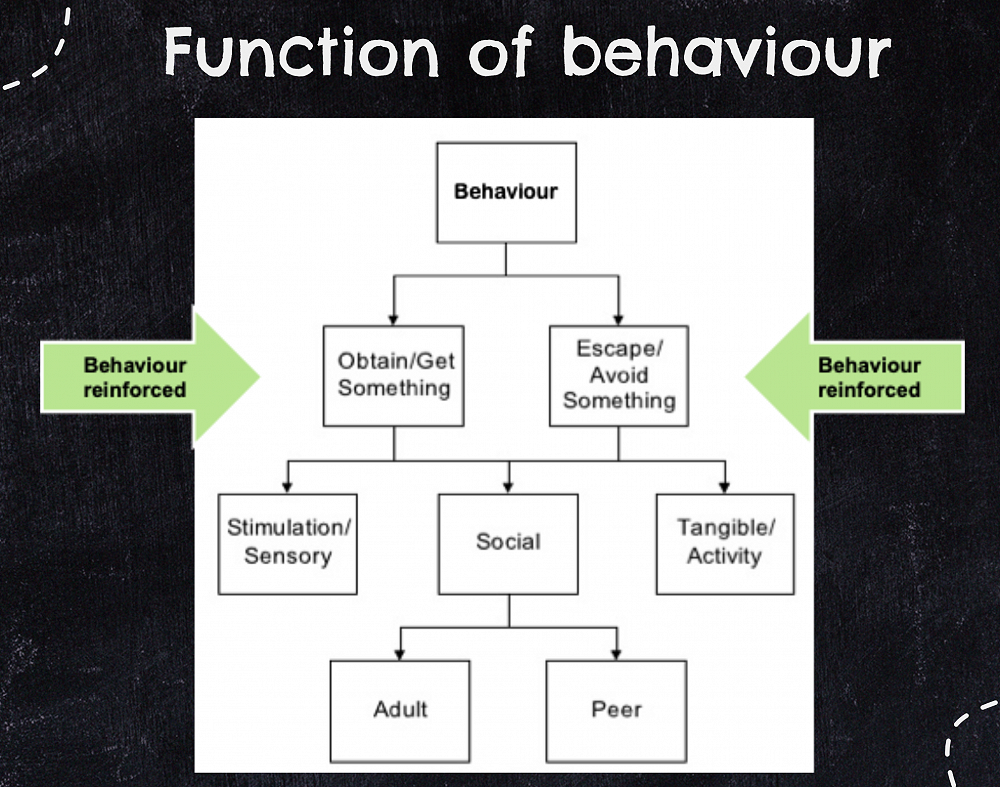
Firstly behaviour is a form of communication. Unfortunately, some children learn that problem behaviour is the most efficient way to communicate their needs and to get these needs met. It is important to remember that children, particularly younger children, may not be consciously aware of what they are doing and the reasons for it. When a child repeatedly engages in socially unacceptable behaviour, they are likely to be doing it for a reason – the behaviour is ‘paying off’ for them. That is, it has a function and purpose for the child. The behaviour works for them, and this encourages them to keep behaving in this way. It is important to recognise that all behaviour occurs for a reason and to take this into account when determining how to respond. There are two main functions of behaviour: to obtain or seek something e.g peer or adult attention and to escape or avoid something e.g. having to complete a task.
The chart below maps out the function of behaviour, which is useful to use when trying to understand why a child has behaved in a certain way. We can then look at ways for the child to still have that need met by replacing their negative behaviour for a positive behaviour or in a positive way.
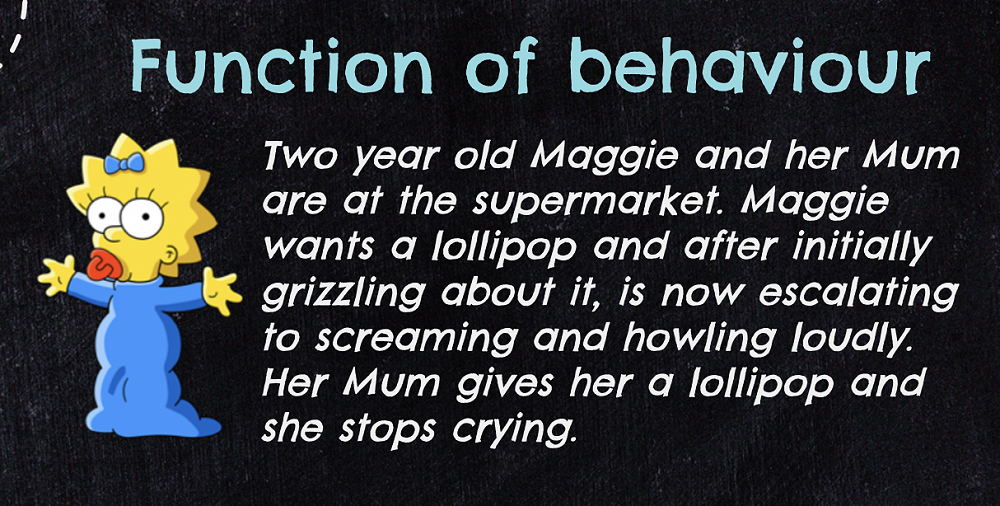
In a familiar scenario to most of us, (see below) what do you think the function of Maggie's behaviour is? Also, what is the function of her mum's reaction/behaviour? Does it stop this behaviour or reinforce it?