SOLO Taxonomy
Thanks you for your support of our Teacher Only Day last week.
Having an entire day for PLD allowed us to connect virtually with Pam Hook, an experienced consultant in learning and teaching. She uses an innovative classroom-based approach to SOLO Taxonomy to help schools around the world to introduce a common language of learning and to design programmes that help students learn to learn.
Pam is an engaging presenter and the work we undertook on the day provided us with the skills and inspiration to begin using SOLO more consistently in all of our classes. We've booked another day with Pam at the start of 2023 and will fine tune each team's programming on that day.
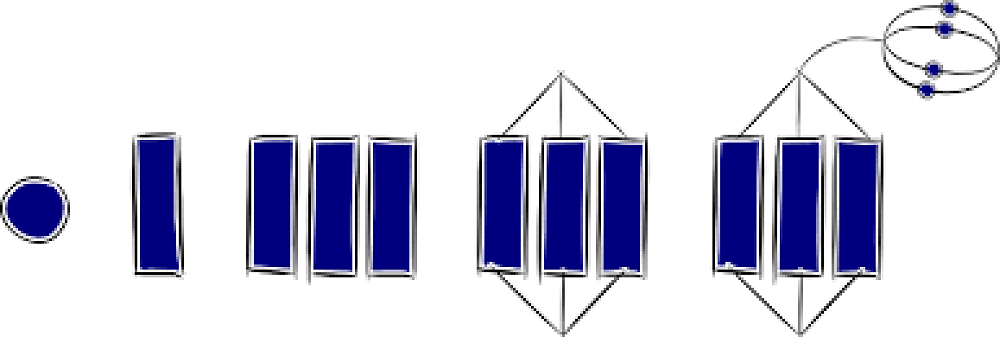
SOLO Taxonomy provides a means for planning and assessing outcomes that separates 'surface' learning from 'deep learning'.
John Biggs and Kevin Collis, the original developers of SOLO, were trying to figure out why teachers called some student learning outcomes 'surface' and some learning outcomes 'deep'. They wanted to determine the criteria teachers were using when they held an impression that a certain piece of work showed deeper understanding than another. The model emerged from work exploring the common patterns found in the student work samples and they began to develop a model from there (Biggs and Collis, 1982).
When using SOLO Taxonomy in classrooms the focus is on the complexity of the structure of the student response, rather than on a categorisation of the student themselves. Students use SOLO as a model to self-assess the depth of their learning outcomes for different tasks.
One place where SOLO is easily visible is in the exemplars in NCEA
Maths at Levels 1, 2 and 3 where SOLO is used as a discriminator: Achieved is numerical reasoning;
Merit is numerical understanding with relational
understanding; and Excellence is numerical reasoning
with extended abstract understanding. (The words in bold relate to SOLO levels).
Gallery