
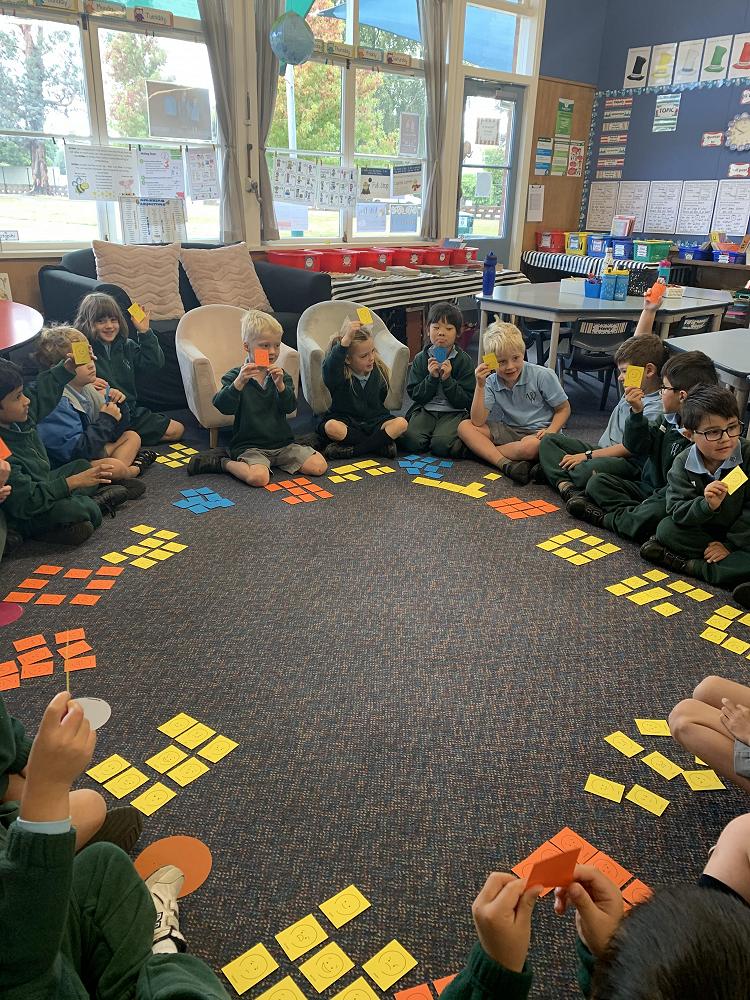
Room 11 Playing 'The Faces Game' from the Sparklers Resource
Emotional literacy (the ability to name and recognise different emotions) is critical to thinking about our feelings and managing our reactions. It can also help us to better understand and be there for others.
Team One students have been utilising the Sparklers online resource throughout the term. One of the activities involved the students playing a game called 'The Faces Game'. This game builds emotional literacy by encouraging students to think about, name and share different emotions.
Each child was given a 'Faces Game' worksheet and we talked about what the nine faces might mean, e.g., happy, sad, angry, scared, excited, surprised, worried, confused and jealous.
We then played 'The Faces Game'!
For this game the students used their own set of face cards, which they were able to use like judges in a contest, holding them up to show how they’d feel in different situations.
“How would you feel if…”
A friend gave you an invitation to their birthday?
You dropped your ice cream and couldn’t eat it?
Someone funny read you a great story?
A classmate became angry and hit you?
You got an award for your work at school?
Someone told you off for making a mess?
You had a sore tummy?
You were asked to do something you’re really good at?
You fell over in front of everyone?
An adult asked you to do something you didn’t want to do?
A friend asked you to do something you didn’t want to do?
You arrived somewhere new and didn’t know anyone?
You were playing a favourite game with friends?
You didn’t understand a question?
The students were reminded that two people might show the same emotion in different ways, e.g., some people may giggle when they feel embarrassed, while others may go very quiet and look away.
The game was a hit with the students! There was a high level of engagement and students were able to explain and justify why a particular emotion was chosen. Some students chose two different emotions and could provide a clear explanation for their choices.
Away from this game, we can encourage students to share their emotions when telling stories and expressing themselves, and by noticing and recognising the emotions we see in stories and everyday life.