Week 3, Term 1 Newsletter
In this week's newsletter:
School Life
This Week
Christmas Tree Fundraiser
Run Club
Extra Curricular Opportunities
Netball - Windmill Park
Sports - Code of Conduct
Other Opportunities
Herne Bay Racket Club
Skids
Holy Moly Arts & Crafts
Playball
Western Springs AFC Junior & Youth 2026 Season Registrations
Believe Dance & Acro
Philippa Campbell School of Ballet
Learn French
School Life
This Week
During Meet the Studio, a few questions came up that I thought might be useful for all whānau to hear the answers to.
How is the learning different at each year level?
How is the day broken up?
How are children grouped?
How are children assessed?
These are all interlinked, but I will try to keep this as succinct as I can.
Our whole school operates on the same timetable throughout the day.
Block | Subject |
|---|---|
Block 1 9:00-10:10am | Roll/Notices Mathematics |
Block 2 10:30-11:30am | Writing |
Block 3 11:50-1:10pm | Reading Phonics |
Block 4 1:50-3:00pm | Kaupapa: Science/Social Studies/PE/Arts/Māori/Health |
Teachers across each of the teams plan together every Wednesday afternoon so the learning is consistent across the team, e.g. all Year 3-4 children (English and Māori-medium) have the same programme.
Below is an example of some of the Writing progressions for Audience, purpose, and language choice. Children are required to cover a greater quanitity of progressions as they move up year levels with increasing difficulty.
Year 3 | Year 4 | Year 5 | Year 6 |
|---|---|---|---|
Identifying the audience and purpose for a text, then planning and writing for the intended audience and purpose. Choosing an appropriate language register (e.g. formal or informal language). Selecting and using adjectives, adverbs, vocabulary, and phrases that are increasingly precise in expressing the intended meaning. Using a range of language features to enhance writing and describe how they can communicate meaning figuratively. | Identifying the audience and purpose for a text. Planning and writing with the audience in mind, by selecting the appropriate text type, language register, and words to best communicate the intended meaning. Selecting and using words and phrases appropriate to the purpose of writing. Using figurative language, such as similes and metaphors, to create vivid images and engage the reader. | Planning and writing with an audience and purpose in mind so that their writing is in the most appropriate text type and style. Justifying their use of language register and words to best communicate the intended meaning to the intended audience. Considering how different audiences may be affected by the text they are creating. Selecting and using words and phrases that clearly express actions, feelings, situations, or conditions. Deliberately and carefully selecting and using literary devices, including simile, metaphor, and personification, to create vivid images and effects to engage the reader. Explaining how the devices they have used help create meaning for the intended audience. | Planning and writing for an intended audience and purpose, making careful choices about the most appropriate text type and style, language, register, and words, and justifying these choices. Making deliberate choices about what content to include or leave out in the texts they create, based on their understanding of how the writing may affect others. Selecting and using words and phrases that clearly express differences, additions, and other logical connections. Deliberately selecting and using a range of literary techniques, including imagery, personification, figurative language, alliteration, and idioms, to meet the purpose of the writing and engage the reader. Explaining how the devices they have used help create meaning for the intended audience. |
Teachers use these progressions to design the learning they will do for the next week. They will go through the progressions to decide what is needed by the learners in response to what they observed in previous weeks and ensure coverage of the curriculum.
All children are exposed to work at their year level (usually in a whole class format) and then have more targeted small group workshops that are specific to their needs in relation to the learning progression being worked on that week.
All studios operate across a number of year levels to cater to the needs of the learners. Teachers also design small group workshops that they then place children in to meet the needs they have seen from each learner. Each teacher will also make slight tweaks to the planning to suit the needs/interests specific to their learners.
As children move through the year levels, they move through the progressions in the curriculum. Generally, the average child is working at the year level they are in, e.g. A 10-year-old child in Year 5 is working on the Year 5 curriculum. This corresponds to the goal wheels on Hero.
Here is a link to the Ministry website we shared at Meet the Studio. It gives you an outline of what is covered at each year level and ways you can support at home.
Groupings change in response to the learning we see from the children. Generally, this is carefully monitored by teacher observations. We are constantly monitoring the way your child interacts with the material and the answers and thinking they share. Occasionally, we use more summative ways of assessing progress like BSLA phonics checks, PhoM testing and PATs. These are all meant to be low-stakes testing to support your child to achieve their best and give teachers information about the next steps for your child. This year we will begin the trial of the new SMART tool in Years 3-6. This assessment information will not be reliable this year but the data gathered by the Ministry will be used to calibrate the testing for 2027.
When the children are not with the teacher, they engage in follow-up work that relates to the learning they are doing. It is specific to their learning level, not generic across the class. This gives children time to practice the skills they are learning.
Our learning follows the format:
I do: Teacher models
We do: Supported practice with the teacher
You do: Independent practice of skill
We really appreciate the parents who have taken the time to ask us questions or send us emails. If you are wondering about anything and think it might be a useful newsletter item, please email me rebecca@westmere.school.nz
Stationery and School Donation Update
The majority of you have paid for stationery - thanks! If you haven't yet, please do so ASAP.
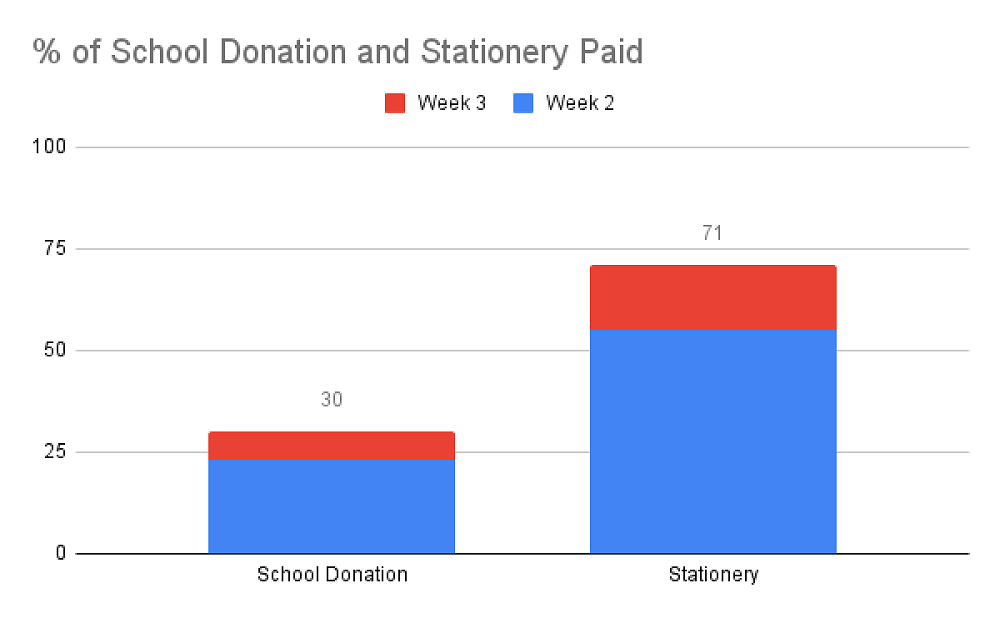
School donation is a big amount all at once. If you're able to contribute, we recommend setting up an AP.
Weekly $15
Monthly $52
Or termly $130
Westmere School (Auckland) Board
12-3020-046008-00
Christmas Tree Fundraiser
A massive thank you to the Westmere School community for supporting Sam & Harry's Christmas Trees. It was great to meet so many school families and we really loved selling and delivering to you all! We are proud to be donating $250 to the school for sports equipment.
We wish you all a great year and hope to see you all again in December! Sam & Harry.
Run Club
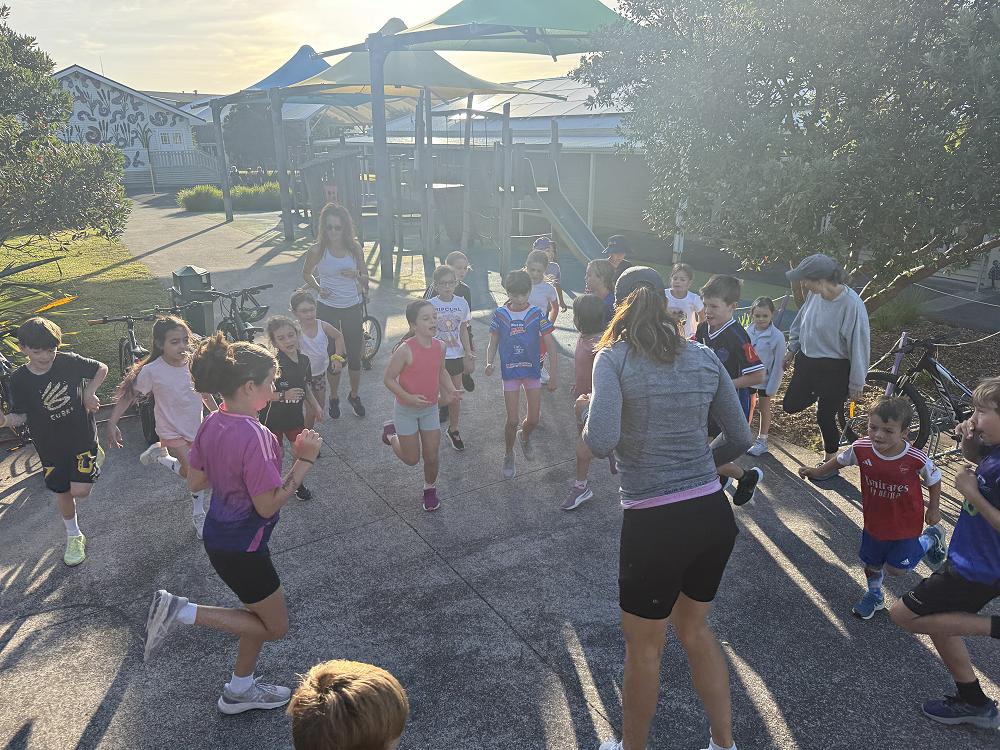
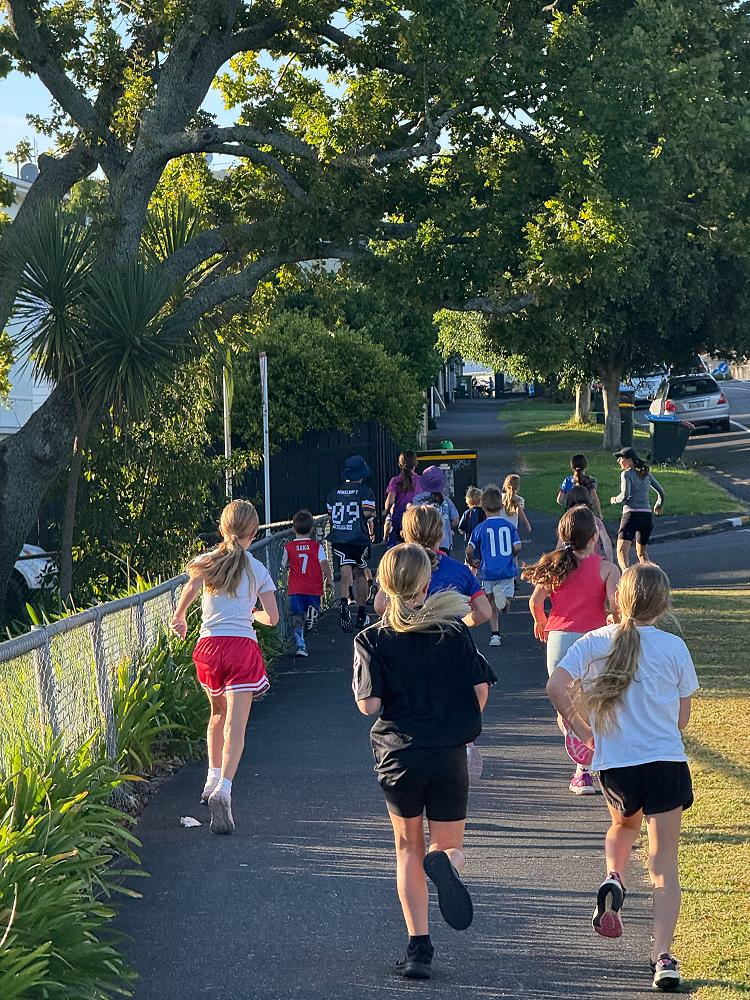
Run Club has started with a bang for 2026! Over 25 kids and parents hitting the streets. All welcome - we leave every Wednesday morning at 8:10 from school!
Extra Curricular Opportunities
Netball - Windmill Park
We are now taking expressions of interest for netball in Terms 2 and 3. Games are on Wednesdays (Year 5-6) and Thursdays (Year 1-4) at Windmill Park.
Year 1-2 (4v4)
Year 3-4 (5v5)
Year 5-6 (6v6)
Due to it being a shorter term, we would like to start building our teams, but note that the games don't start until May.
Please register your interest here.
PREVIOUS PLAYERS/TEAMS: You may have roll-over players from last year who want to play together. Please email your team lists to sport@westmere.school.nz. Please note that we will add any newbies to your team if you don't have enough players.
NEW PLAYERS: Register your interest in the link above so we can place you in a team.
UNIFORMS: Bike shorts and school shirt (no more skorts)
Sports Code of Conduct
We endeavour to place every child who wishes to play sport at Westmere into a school team. Sometimes this isn't able to happen due to not enough players to create a team or too many players in existing teams. We avoid overloading teams as children do not get enough game time, and it creates too many logistics for the coaches/managers. We will put your child on a waitlist if there isn't a team for them, and if any gaps open up, we will let you know.
To play in school sports teams (at a cheaper rate than playing sports through clubs), you can expect that we:
Organise children into social teams
Register players
Support coaches and managers through the season
Timetable for practice sessions at school
What we expect from you:
Coaching, management and support
Willingness to enable new players to partake in sports teams
Encourage and support your children in learning new skills
Other Opportunities
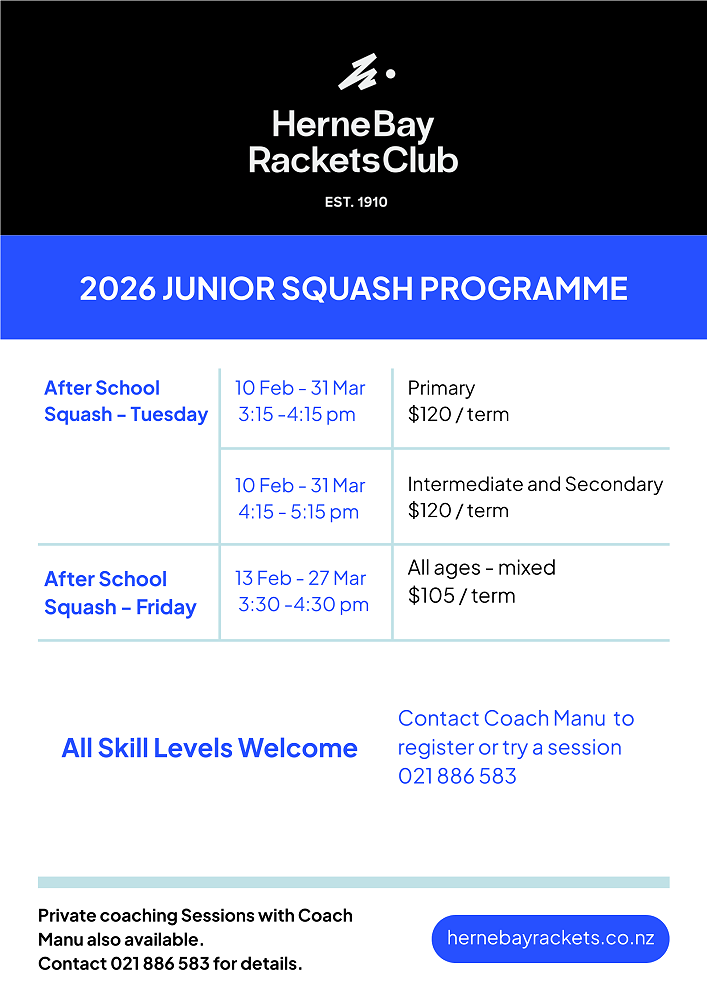
Herne Bay Racket Club
Skids

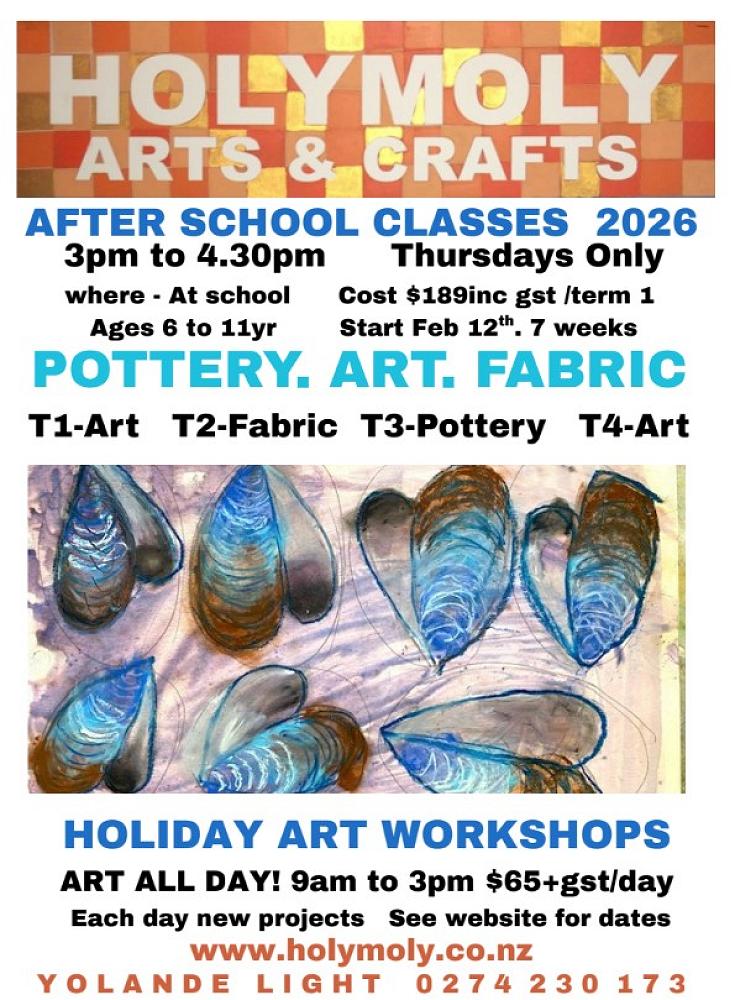
Holy Moly Arts & Crafts
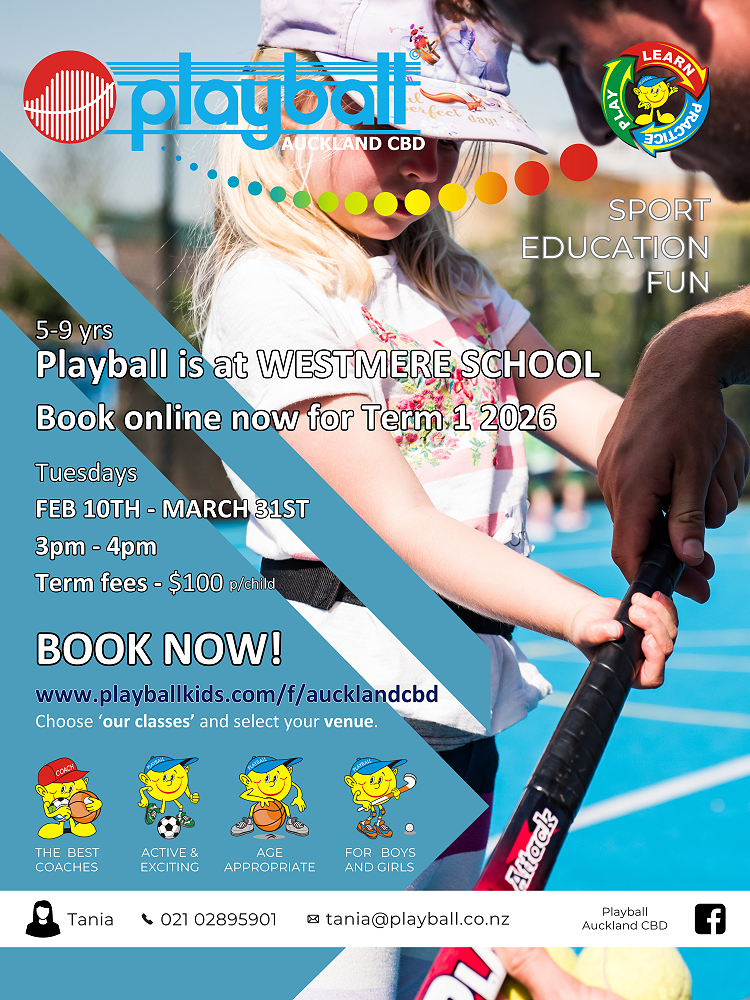
Playball
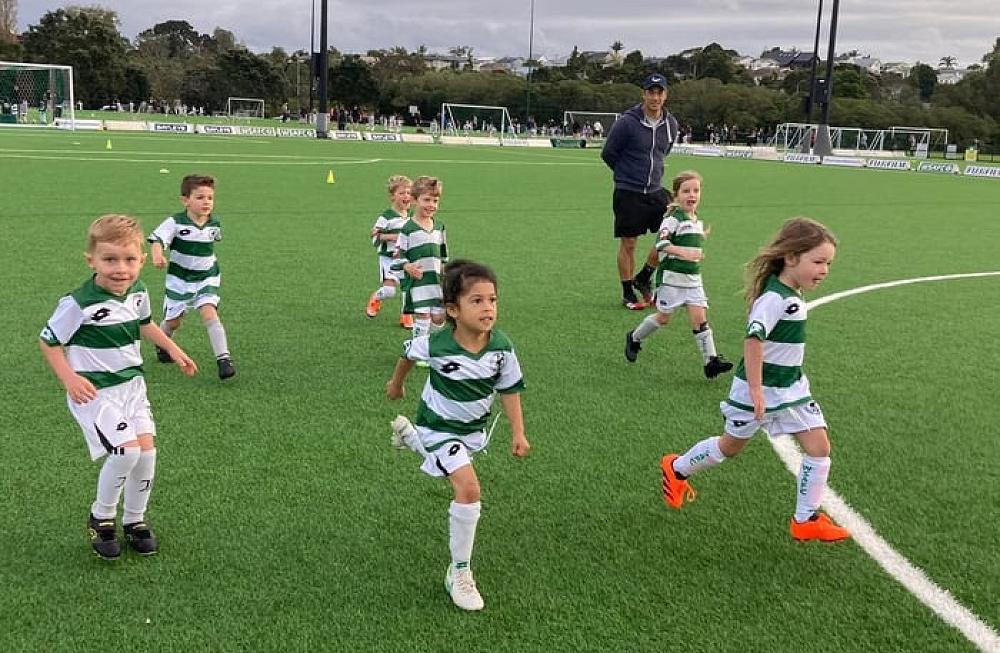
Western Springs AFC Junior & Youth 2026 Season Registrations
Open until - Sunday 8th March 2026
We are pleased to announce that registrations for the 2026 season are now open!
REGISTRATIONS
Registrations Close: 8th March 2026
5th to 8th Grade (born 2021 to 2018) $210
9th to 19th Grade (born 2017 to 2007) $240
To register for the 2026 season, please use the link to our registration page.
Believe Dance & Acro

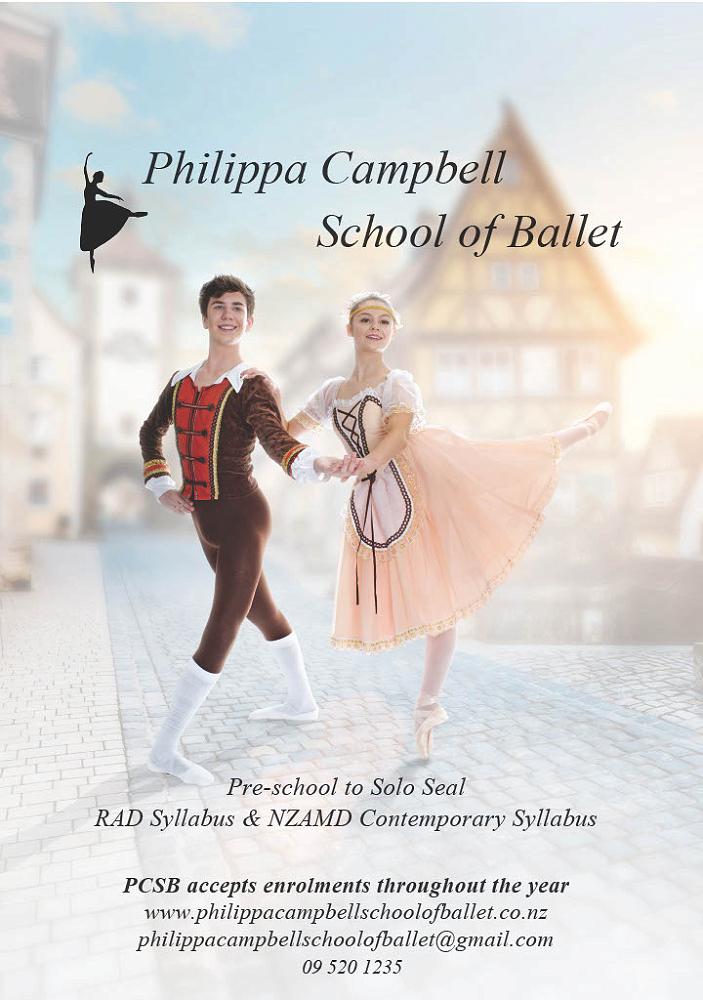
Philippa Campbell School of Ballet
Learn French