
Year 6 Literacy
Reading
In Year 6 your child will be learning to:
- read longer stories more quickly, and read for longer periods of time
- find information and ideas easily in the story, as well as information that is more hidden – using clues in the story and what they already know
- work out words they don’t know the meaning of by using clues in the story or pictures and diagrams
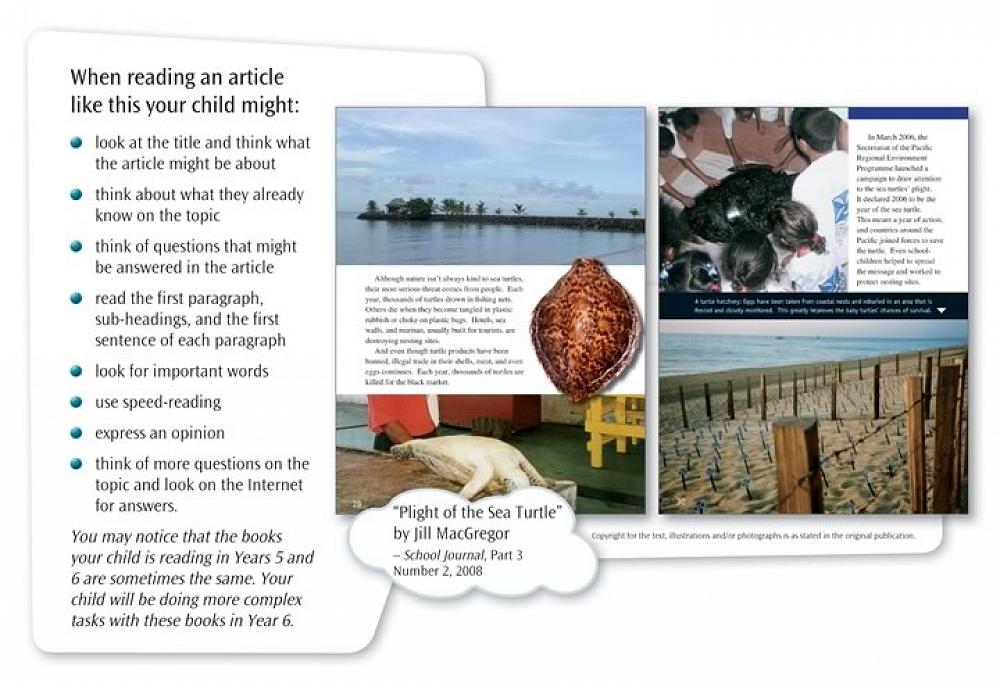
- quickly find important ideas and information by ‘skimming’ and ‘scanning’ (e.g., using sub-headings, keywords or first sentences in paragraphs)
- know they sometimes need to read from several sources of information (books, magazines, the Internet) to get all the information they need for their work.
By the end of the year they will:
Your child will be reading non-fiction
books, chapter books, magazines, and
information on the computer. They will
be reading these kinds of stories in all
areas of the curriculum.
Reading at Home
Make reading fun
- Have discussions together about books – read the books your child is reading.
- Encourage Internet research about topics of interest – notice what they are keen on.
- Make your home a reader-friendly home with plenty of books, magazines, newspapers that everyone can read – look for books and magazines at fairs and second-hand shops. Ask your family or whānau if they have any they no longer want.
- Share what you think and how you feel about the characters, the story or the opinions in magazines and newspapers you are reading. It is important that your child sees you as a reader and you talk about what you are reading.
Encourage your child
to read every day.
Make reading fun and
praise your child’s
efforts, all the time.
Read together
- Reading to your child is one of the most important things you can do, no matter how old they are. You can use your first language – it does make a difference to your children’s learning.
- When you are reading to your child, you can talk about words or ideas in the text that your child might not have come across before.
- Children are often interested in new words and what they mean – encourage them to look them up in a dictionary or ask family/whānau about the meaning and origin.
Keep the magic of listening
to a good story alive by
reading either made up,
retold or read-aloud stories
to your child – with lots of
excitement through the use
of your voice!
Keep them interested
- Help your child identify an author, character or series of books they particularly like and find more in the series or by the author.
- Talk about the lyrics of songs or waiata, or the words of poems your child is learning, and see if there are any links to who they are, and where they come from.
- Think about subscribing to a magazine on your child’s special interest, e.g., animals, their iwi, kapa haka or sport, or check out the magazines at the library, or on the Internet.
- Go to your local library to choose books together. These might be books your child can read easily by themself. They might be books that are a bit hard, but your child wants to read so you can help by reading a page to them, then helping them read the next.
- Play card and board games together – the more challenging the better.
Be a role model. Let your child see you enjoying reading
– whether it’s the newspaper,
a magazine, a comic, a cookbook or a novel. Read in the
language that works best
for you.
Writing
In Year 6 your child will be learning to:
- choose the type of writing to suit the audience
- plan what they will write in different ways
- organise their writing logically using paragraphs as well as other features like headings, sub-headings, diagrams, pictures and captions
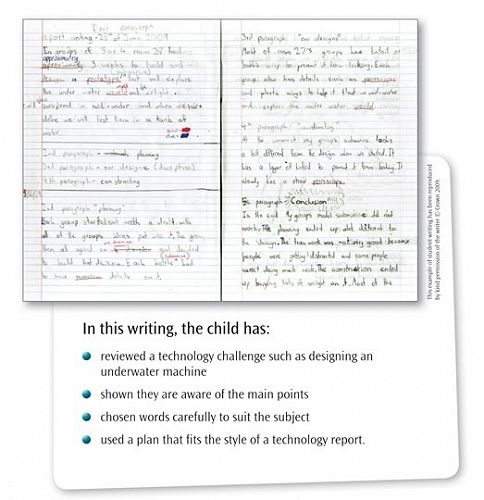
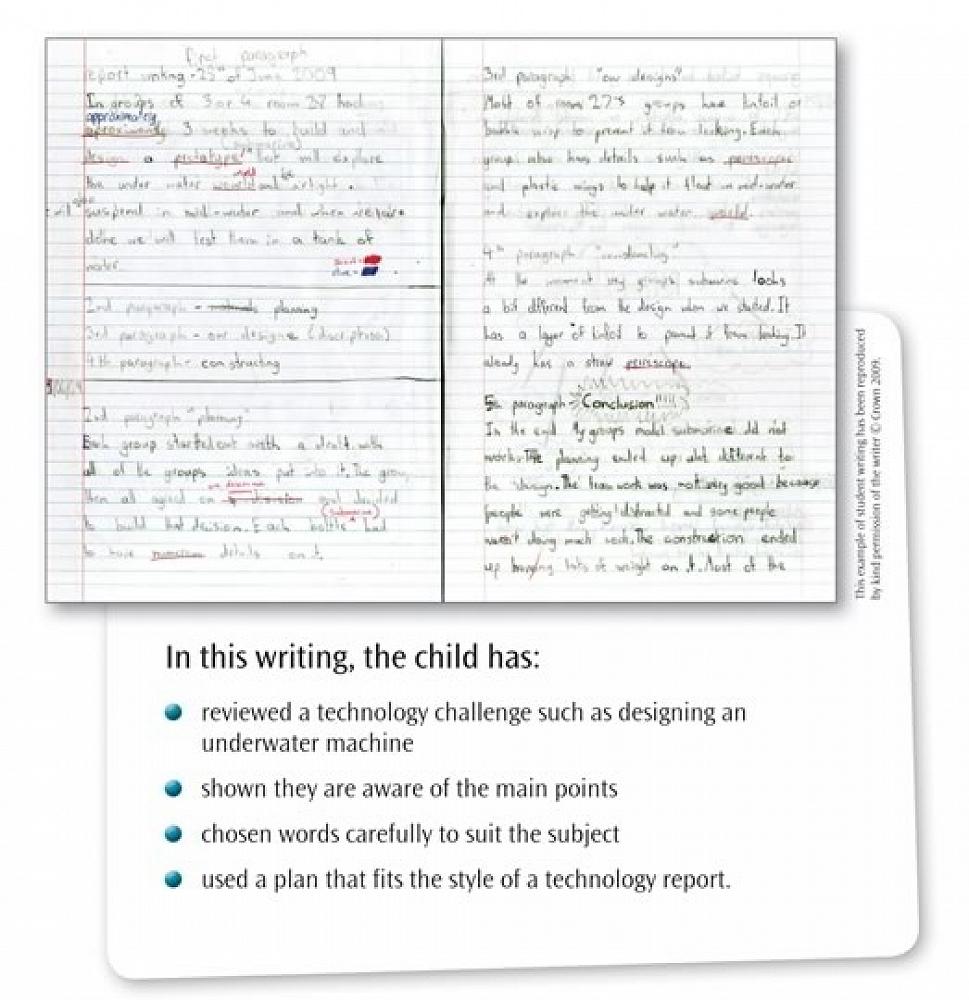
- choose words carefully to suit the topic or purpose and to make people want to read their writing
- check their writing to make sure it makes sense
- spell most words correctly and use appropriate punctuation.
By the end of the year your child’s writing will continue to show how they are thinking about – as well as describing – their experiences and the information that they have got from talking, listening and reading about topics in all areas of the curriculum.
Writing at Home
Make writing fun
- Encourage your child to write about their heroes, tïpuna (ancestors), sports events, hobbies and interests to help keep them interested in what they are writing about.
- Play word games and do puzzles together. Games and puzzles such as crosswords, tongue twisters and word puzzles help build your child’s knowledge of words, spelling, thinking and planning skills.
- Start a blog about a family interest. Find a topic you’re both interested in and set up your own blog.
Be a role model. Show
your child that you write
for all sorts of reasons.
Let them see you enjoying
writing. Use your first
language – this helps your
child’s learning, too.
Write for a reason
- Encourage your child to write.
- Suggest your child is responsible for the weekly shopping list, equipment list for weekends away and holidays, task lists for the week.
- Ask your child who they would like to write to or for – emails, letters, texts, postcards. It will help if some of what your child writes about is for others.
- Short stories or a journal – on paper or on a computer – can help them to write about their experiences and their own feelings about things that have happened at school, in their family, on the marae, in the world, at sports events and on TV.
- Report on a new baby or pet addition to the family. This might be a slide show, scrapbook, page on the computer.
- Make an argument in writing for a special request – trip, event, present etc.
- Draw up written contracts for agreed jobs; e.g., Every day I will…(make my bed, do one lot of dishes, and when I complete the contract I can choose…).
Keep writing fun
and use any excuse
you can think of to
encourage your child to
write about anything,
anytime.
Talk about your child's writing
- Talk about ideas and information they are going to write about. Talk about experiences, diagrams, graphs, photos, treasures and taonga, waiata, pictures, whakapapa and material that your child is planning to use for school work. Discussing the information and main ideas can help their planning for writing and their understanding, too.
- Share enjoyment of their writing. Read and talk about the writing that your child does. Give praise for things they have done well and say what you liked and why – this all supports their learning.
- Play with words. Thinking of interesting words and discussing new ones can help increase the words your child uses when they write – look words up in the dictionary or on the Internet to find out more about what they mean. Talk to family and whänau members to learn more about the background and the whakapapa (origins) of the words.
- Share your own writing with your child – lists, planning for family events, song lyrics or letters and emails. You can help them to see that you too use writing for different purposes.
Talk about what your child
writes. Be interested. Use
it as a way of starting
conversations. Listen to
their opinion, even if you
don’t agree with it.
Gallery