
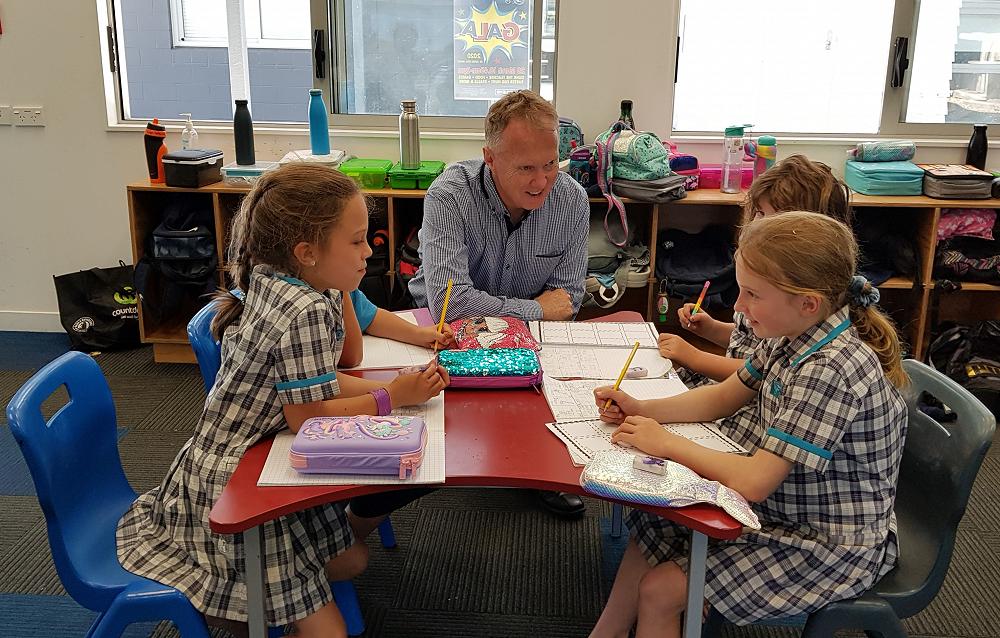
Photo by Wgp School
Our Teaching
Teacher actions promoting student learning
While there is no formula that will guarantee learning for every student in every context, there is extensive, well-documented evidence about the kinds of teaching approaches that consistently have a positive impact on students’ learning. This evidence tells us that students learn best when teachers:
- Create a supportive learning environment
- Encourage reflective thought and action
- Enhance the relevance of new learning
- Facilitate shared learning
- Make connections to prior learning and experience
- Provide sufficient opportunities to learn and inquire in a positive teaching-learning relationship.
What should this look like in our classrooms?
Students are likely to:
- Take an active role in decisions about the content, process and assessment of learning
- Take an active role in learning
- Wait less and learn more
- Be interested in their learning
- Feel empowered to make suggestions
- Ask questions of themselves, the teacher and others
The teacher is likely to:
- Notice, recognise and respond to learners - which may necessitate adapting plans in the teaching moment
- Give quality feedback and feed-forward that relate to the learning areas as well as the thinking behaviours
- Alter and adapt plans in response to learners
- Revisit learning plans with students
- Show themselves as learners and to model thinking behaviours
Content, topic or foci are likely to:
- Be (or become) interesting to students
- Draw on authentic contexts - related to things that are happening in the local and global community
- Relate to students' existing knowledge and experience
- Broaden students' competencies
Resources are likely to:
- Come from a range of sources - local, national and global
- Draw on diverse perspectives
- Include a range of media
- Be sourced not only by teachers, but also by students, parents, community members and others
Activities are likely to:
- Take students into real, authentic contexts
- Be flexible and adaptable
- Be dynamic - activities that lead to and generate other unforeseen activities
- Be for other individuals and groups
- Be purposeful and worthwhile
- Be aligned to important outcomes
The classroom culture is likely to:
- Develop creative, critical or reflective thinking
- Focus on learning
- Embrace flexibility
- Feel like a place where students are confident to have a say
- Encourage questions, contributions, suggestions, learning from mistakes and successes