Whangārei Pā sites (fortresses) and Papakāinga (villages)
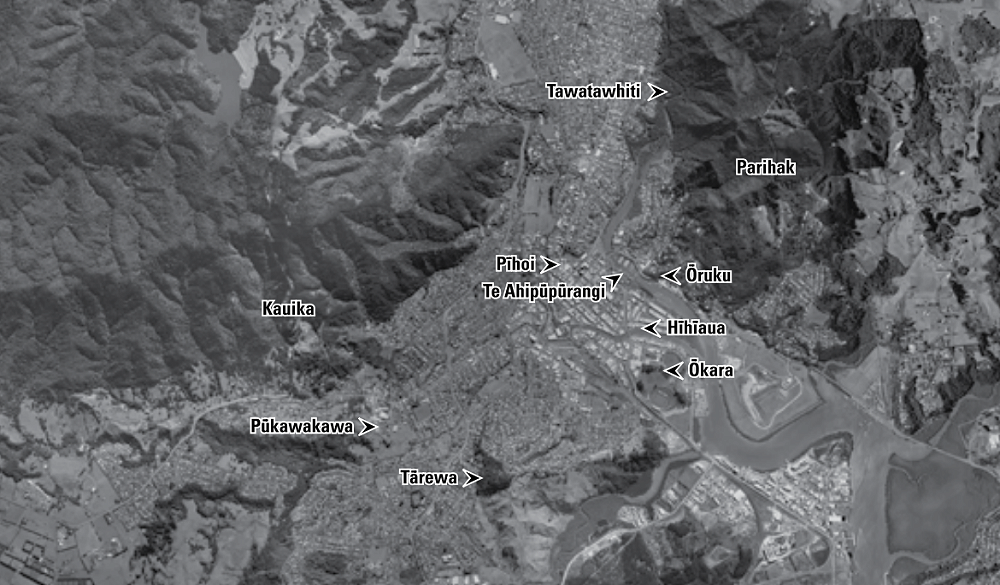
Many small Māori settlements were located within the Whangārei basin.
HĪHĪAUA – A canoe landing and fishing village belonging to local tribes Te Uriroroi, Te Parawhau and Ngāti Kahu. This site was situated on the Waiarohia Stream near the junction of Port Road and Okara Drive.
ŌKARA – A hilltop pā above Hīhīaua
TAWATAWHITI – The main village located in the Mair Town area and attached to Parihaka Pā. This was also the name given by the chiefs of Whangārei to Capt.Gilbert Mair (Tawa) when he was born here.
TE AHIPŪPŪRANGI – A fishing village and canoe landing once located where the Town Basin is. William Carruth, the first pakeha to settle in Whangārei, lived here.
PĪHOI – A Ngāti Kahu village where St Andrews Presbyterian church now stands. The people here welcomed William Carruth when he arrived in 1839.
PARIHAKA – A citadel of pā and papakāinga once located on the ancient volcano remnant standing on the north-eastern skyline above Whangārei city.
ŌRUKU – The pā which occupied “The Bluff” and guarded the immediate entrance into the Whangārei basin.
PŪKAWAKAWA – The pā site where the Whangārei Hospital now stands. This pā was located at the western end of the city where tracks came from the Wairoa, Kaipara, Hokianga and Kaikohe areas.
TĀREWA – The pā which stood on Anzac hill.
KAUIKA – Pā site on the Western Hills opposite the hospital.