
Alicia's Essay
For Alicia's reading follow up she had to write an essay on the first scale model of the universe.
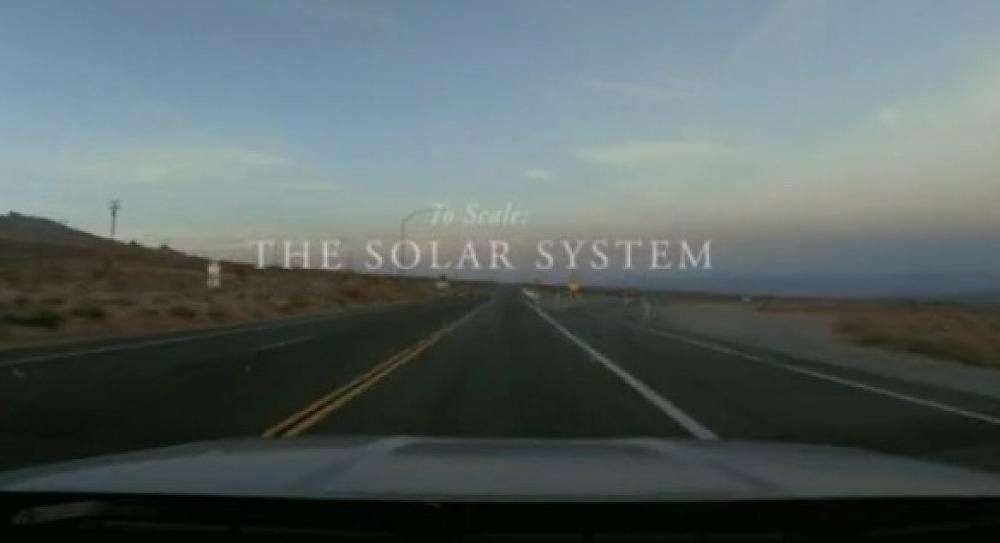
To Scale,
The scale of the solar system. Our world contains many mysteries and wonders some that have been found and some that we are still yet to discover. The scale of the universe website contains many facts about our universe today. But how interesting is it to tweens? Mainly about all sorts of different facts about our universe, Looking through the website the most interesting information for teens would be the scale model of the solar system. But why was it so interesting?
On a dry lake bed in Black Rock Desert, Nevada, Wylie Overstreet and Alex Gorosh built the first scale model of the solar system. They wanted to explain just how vast our planets, dwarf planets, asteroids and comets really are by building the first scale model the solar system. If you look up an image of the solar system it looks tiny. The two filmmakers wanted to explain what it really looks like in size and length. All the photos of the solar system aren’t to scale. They wanted to create an accurate scale model of the solar system. The only way to see a scale model of the solar system is to build one. A quote from James Irwin, Apollo 15 (quote found from scale of the universe.com) As we got farther and farther away, the Earth diminished in size. Finally it shrank to the size of a marble, the most beautiful marble you can imagine… seeing this has to change a man. The two filmmakers wanted to experience this.( All this information has been from the scale of the universe website)
They had 36 hours to measure the distances,trace out the orbits set up a time lapse shot from up on top of a nearby mountain. They were using 7 miles to create a scale model of the solar system with a marble as earth. In their scale model, Mercury, Venus and Earth are, respectively, 224 feet, 447 feet and 579 feet away from the sun, Neptune is 3.5 miles away, Jupiter is 0.57 miles, Saturn is 1.1 mile and Uranus 2.1 miles. In reality Mercury: 57 million km / 35 million miles, Venus: 108 million km / 67 million miles, Earth: 150 million km / 93 million miles, Mars: 228 million km / 142 million miles, Jupiter: 779 million km / 484 million miles,
Saturn: 1.43 billion km / 889 million miles, Uranus: 2.88 billion km / 1.79 billion miles, Neptune: 4.50 billion km / 2.8 billion miles and Pluto: 5.91 billion km / 3.67 billion miles. The filmmakers drove round each of the paths at night with a light to place all of the marbles throughout the 7 miles. When the time lapse was ready they drove round each orbit with a light. (all the measurements from the daily mail website and other information from the scale of the universe website)
Why would this information be interesting to tweens? Because tweens like discovering and learning new things that haven’t been done before. It is about our universe. All of this is about learning,creating and being able to understand new things about the universe. Tweens get the opportunity to learn and discover information that they haven’t learned about and seeing adults trying something new that they have wanted to do. It is empowering to them and they start wondering about what they want to do and start making their ideas reality just from watching someone else with an idea.
Wylie Overstreet and Alex Gorosh had an idea and made it a vision. They wanted to build the first scale model of the solar system. The wanted to explain just how vast our planets, dwarf planets, asteroids and comets really are. All photos of the solar system aren’t realistically presented - it is not what the solar system looks like. The two filmmakers wanted people to see what the solar system actually looks like in a photo. They knew what they wanted to do and didn’t let anything stop them and that’s how they built the first scale model of the solar system.
Bibliography
Information based/found from http://scaleofuniverse.com/scale-model-of-the-solar-system/
Information from the third paragraph was from http://www.dailymail.co.uk/sciencetech/article-3240739/The-world-s-scale-model-solar-created-Nevada-covers-7-MILES-desert.html