

Literacy and Numeracy
Woodend School follows an evidence-based approach to teaching literacy and numeracy. We aim to enable students to be able to read for meaning and enjoyment and to be able to communicate ideas through speaking and writing.
Literacy
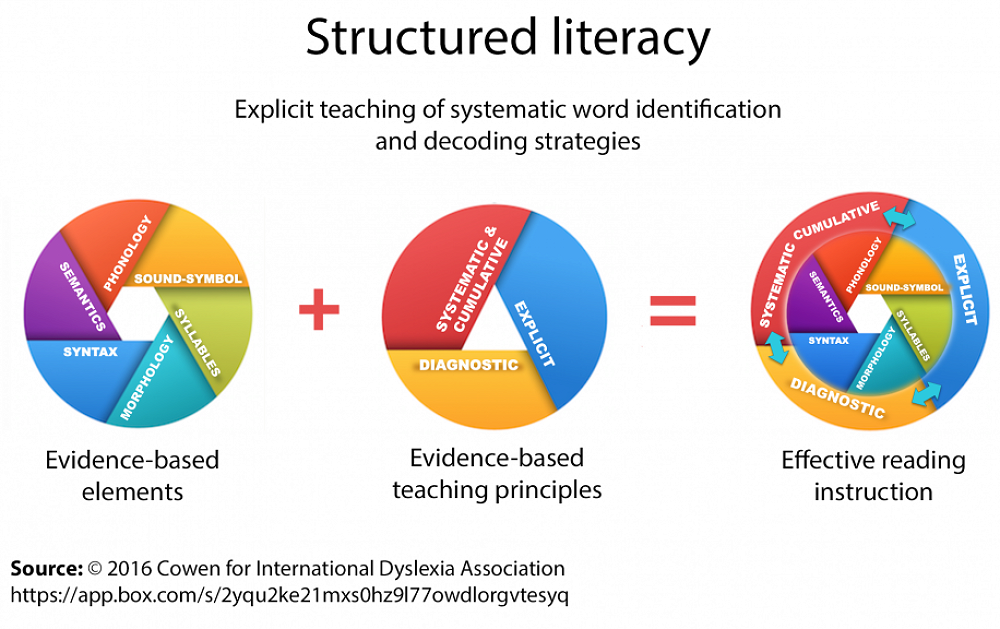
A structured literacy approach at Woodend School provides:
explicit, systematic, and sequential teaching of literacy at multiple levels – phonemes, letter–sound relationships, syllable patterns, morphemes, vocabulary, sentence structure, paragraph structure, and text structure
cumulative practice and ongoing review
a high level of student–teacher interaction
the use of carefully chosen examples and non-examples
decodable texts
prompt, corrective feedback.
The science of reading is a vast, interdisciplinary body of scientifically-based research about reading and issues related to reading and writing.
This research has been conducted over the last five decades across the world, and it is derived from thousands of studies conducted in multiple languages. The Science of Reading has culminated in the evidence to inform how proficient reading and writing develop; why some have difficulty; and how we can most effectively assess and teach and, therefore, improve student outcomes through prevention of and intervention for reading difficulties.
A structured literacy approach is recommended for students with dyslexia and those who are having difficulty with decoding because it directly addresses phonological skills, decoding, and spelling.
The Code
Learning the code is the ability to decode and encode written language.
Students take the understanding of spelling patterns, rules, and morphology to the next level, developing independent readers and writers.
The Code is a teaching resource to support teaching Structured Literacy from Year One through to Year Eight. Structured Literacy includes explicit and systematic teaching of phonological awareness, the alphabetic principle, syllable types and morphology, and The Code encompasses these.
Dictation provides students with the opportunity to apply their new and
developing knowledge of the alphabetic code at sentence level and is a bridge to independent writing.
Mathematics/Numeracy
Our teachers are empowered to integrate high impact routines, creating an effective blend of teaching styles and a varied and inclusive repertoire of tasks. Our teachers are empowered to translate research into everyday classroom practice and become confident, creative communicators of mathematics.
Mathematics at Woodend School is evolving and a major focus for staff and their professional development in 2023-24. In each class, students will have group problem-solving lessons, teacher-led lessons, follow-up activities and basic facts practice..
Foundational mathematics is taught a minimum of five days a week and informed by the New Zealand Curriculum Te Mātaiaho (Understand, Know, Do) and Progress Outcomes.
At Woodend School, we integrate mathematical concepts and learning through a range of meaningful and authentic contexts. Kaiako and ākonga use the Te Mātaiaho progress steps (from 2023) to inform learning pathways.
Kaiako use a range of teaching methods and strategies to cater for the needs of their ākonga. Planning is reflective of and informed by data and tangible evidence.
We aim to engage ākonga in rich mathematical programmes that build confidence and challenge and support ākonga to develop problem solving skills by taking risks and thinking logically.
Problem-Solving is vital to the development of students’ learning to increase their mathematical confidence and dispositions, increase social skills and promote maths in the real world. Each problem will contain a ‘launch,’ group work and a chance to share. During the sharing time, students will justify and defend their answers while correcting misconceptions and errors.