
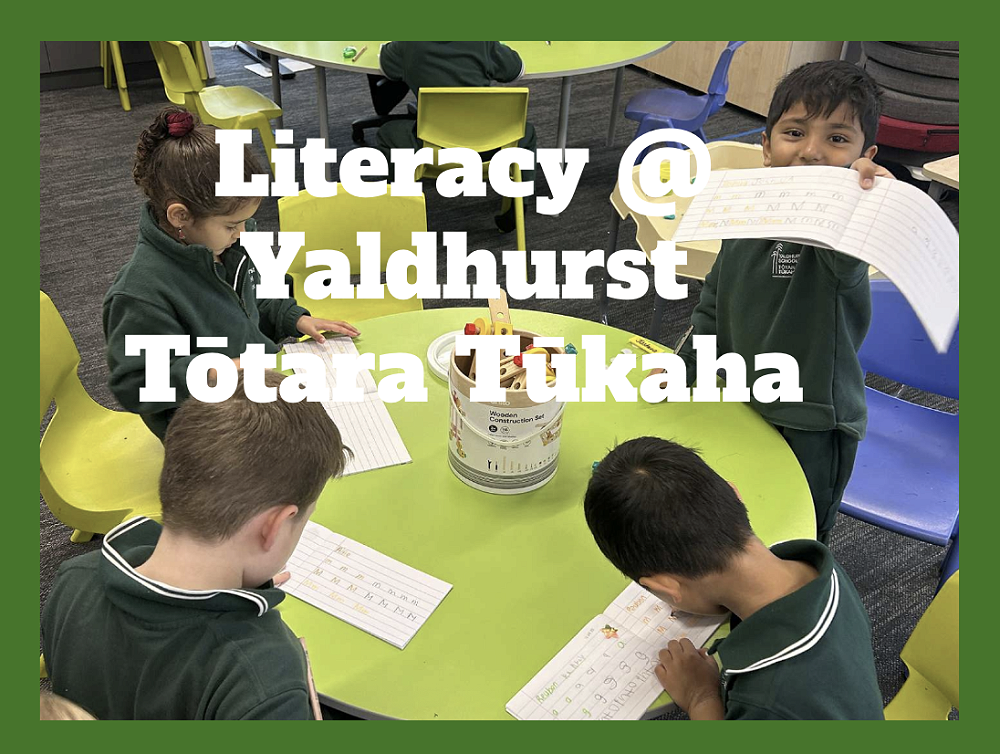
Literacy Learning
Learning to Read & Write
In Year 0-3, we use a structured literacy approach as the foundation when teaching children to read and write. All of our staff have undertaken intensive professional learning to ensure we are delivering the most up-to-date, evidence-based approaches.
A few misconceptions we notice in the media, and the wider community are:
Structured Literacy is just phonics e.g. learning letter names & sounds
Structured Literacy is only about learning to read
Learning to read only involves reading books
Children need a new book every night and each book needs to be harder than the last.
Science has shown that learning to read and write is an explicit, systematic process of mastering knowledge and skills. Biologically, our brains are designed to speak, and recognise faces and objects - not to decipher symbols and attach sounds to them. Learning to read and write is not caught, it needs to be taught.
Our process is clear and is supported by research. We go as fast as we can but as slow as we must to meet the needs of each child.
At each stage of our learning sequence children are:
Learning the graphemes (letter symbols) and the phonemes (sounds) - say, read, write.
Blending the phonemes together to read words
Segmenting the phonemes in words and writing them
Learning to read and write Heart Words - irregular words e.g said
Reading a group of words together as a sentence
Writing a group of words in sequence to make a sentence
Practising each of these steps until they are all automatic before moving on to the next stage
Learning at Home
Every child is explicitly taught every thing that comes home. They may not have mastered it yet, but it will have been taught and we will be practising it at school. New resources (letter cards, words, books) will not come home until we have seen a child read and write at their current stage with fluency and automaticity.
Reading & Writing to Learn
In Year 4-8, we blend a structured literacy approach into an approach that focuses on strengthening foundation skills so that they become tools for learning across the whole curriculum.Although reading and writing are considered separate subjects they are often used together. Texts that students read are used as models for writing, and writing is often a response to what they have read.
A daily literacy programme in our senior school includes:
Reading rich language texts to students, and students reading a wide range of national and international texts to build:
fluency
vocabulary and content knowledge,
knowledge of text structures and features,
word knowledge,
comprehension skills,
a love of books.
Writing for different purposes; to entertain, to inform, to persuade, with a focus on:
Handwriting fluency
Spelling
Writing Structures - sentences, paragraphs, full compositions
Planning and revising
Integration across the curriculum
Writing in response to something that has been read e.g. answering questions, offering opinions
Reading to gain information that can be used when writing e.g. writing an information report
Reading and writing in preparation to speak on a subject
Learning at Home
Literacy home learning for our senior students is focused around developing a lifelong passion for reading. Developing a reader identity is identified within the curriculum so we support students to choose reading materials that interest them, and to read for enjoyment.