
Mathematics @ Tōtara Tūkaha
The new curriculum, Te Mātaiaho-Mathematics is the foundation for learning in Mathematics at Yaldhurst Tōtara Tākaha, and in line with Ministry of Education guidelines, we teach Maths for an average of an hour per day across a week.
Exploring much more than counting, reading numbers, and knowing times tables, we are supporting our learners to become proficient problem solvers and communicators, who can move beyond calculating answers to becoming highly effective mathematicians.
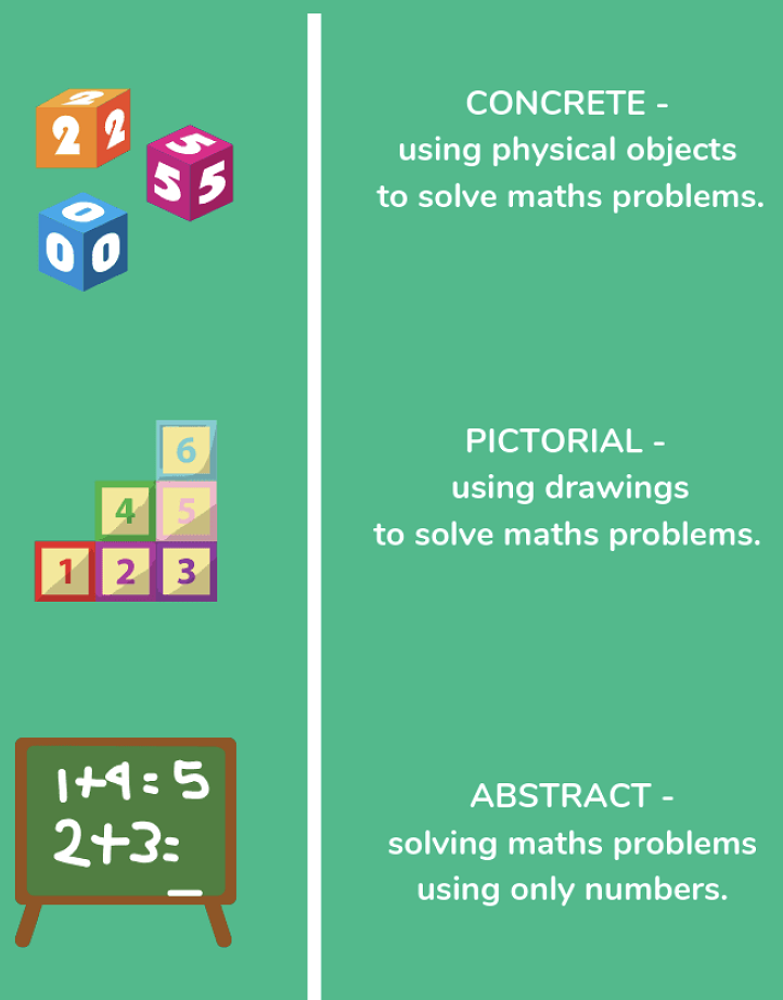
Across the school, we use the Concrete-Pictorial-Abstract approach, as we support learners to master new knowledge and concepts. Where possible we integrate learning within maths areas, and across the curriculum, investigating real world applications.
Unpacking the Curriculum
Understand Big Concepts
Patterns and variations - noticing, exploring, and describing different types of patterns and relationships
Logic and reasoning - develop logical reasoning and critical thinking skills, to evaluate information, question assumptions, and present arguments
Visualisation and application - Working with abstract concepts and developing strategies to solve problems
Know Mathematical Ideas and Procedures
Number - focuses on the study of numerical concepts
Algebra - focuses on making and using generalisations to reason mathematically.
Measurement - using standard and non-standard units to measure objects and quantities.
Geometry - focuses on visualising, representing, and reasoning about the shape, position, orientation, and transformation of objects.
Statistics -focuses on tools, and processes for interpreting situations, using data and making decisions.
Probability - focuses tools and concepts for quantifying chance, dealing with expectation, and using evidence to identify how likely events are to occur.
Do - The Process
Investigating situations - explore situations to build our understanding of them.
Representing situations -use words or symbols and diagrams to demonstrate understanding
Connecting situations - recognise and make links by noticing similarities and differences
Generalising findings - applying what we already know to new situations
Explaining and justifying findings - communicating and reasoning to share ideas and to respond to the ideas of others